How Long Does Deodorant Last? A Complete Guide
Everything you need to know about deodorant longevity - how long a stick lasts, factors affecting staying power, and tips for all-day freshness.
“How long does deodorant last?” is actually two questions in one. There’s the practical question of how long a stick or tube of deodorant will last before you need to replace it. And there’s the performance question: how many hours of protection can you expect from a single application?
Both matter, and both depend on several factors. This guide covers everything you need to know about deodorant longevity—from making your product last longer to staying fresh all day.
How Long Does a Stick of Deodorant Last?
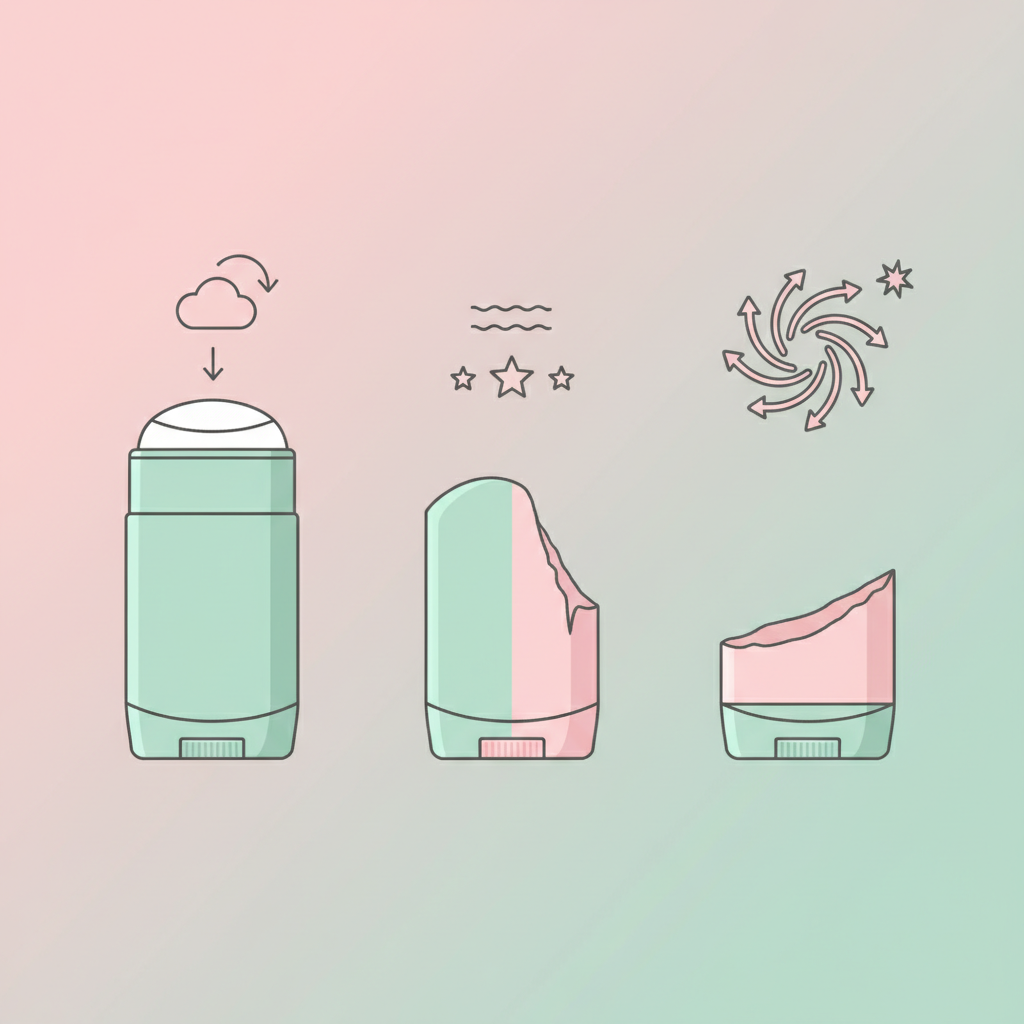
On average, a standard deodorant stick (around 75g or 2.6oz) lasts 4-8 weeks with daily use. However, this varies significantly based on:
Application Habits
Light appliers (2-3 swipes): 6-8 weeks per stick Medium appliers (4-5 swipes): 4-6 weeks per stick Heavy appliers (6+ swipes): 3-4 weeks per stick
More product doesn’t necessarily mean better protection. In fact, excessive application can cause residue buildup and clothing stains without improving effectiveness. If odour is the reason you’re applying more, the garment is worth ruling out first — see why washed shirts still smell of body odour.
Product Format
Different formats have different lifespans:
| Format | Typical Size | Average Lifespan |
|---|---|---|
| Stick | 75g | 4-8 weeks |
| Roll-on | 50ml | 6-10 weeks |
| Cream/Balm | 60g | 8-12 weeks |
| Spray | 150ml | 4-6 weeks |
Creams and balms tend to last longest because you use smaller amounts per application. Sprays often run out fastest due to overspray and evaporation.
Reapplication Frequency
If you reapply midday (common during transition to natural deodorant or in hot weather), expect your product to last roughly half as long.
How Long Does Deodorant Protection Last?
This is where things get more personal. How long your deodorant keeps you fresh depends on multiple factors.
Typical Duration by Product Type
Natural deodorant: 4-8 hours Conventional deodorant: 6-12 hours Antiperspirant: 12-24 hours (blocks sweat, not just odour) Clinical-strength antiperspirant: 24-48 hours
These are averages. Your individual results will vary based on the factors below.
Factors Affecting Staying Power
Body Chemistry
Everyone’s skin has a unique pH level and bacterial composition. This is why a deodorant that works brilliantly for your friend might not work for you. Your natural body chemistry can either help deodorant work more effectively or break it down faster.
Activity Level
The more you sweat, the faster your deodorant gets diluted and washed away. During intense exercise, even the best deodorant may only last 2-3 hours.
Weather and Environment
Hot, humid conditions increase sweating and can reduce deodorant effectiveness. Air-conditioned environments are generally kinder to your deodorant’s staying power.
Stress
Stress sweat comes from apocrine glands (concentrated in your armpits) rather than eccrine glands. Apocrine sweat contains more proteins that bacteria love to feast on, creating stronger odour. High-stress days may require reapplication.
Diet
What you eat affects how you smell. Garlic, onions, spicy foods, alcohol, and caffeine can all intensify body odour, making your deodorant work harder.
Hormonal Fluctuations
Hormonal changes (menstrual cycle, pregnancy, menopause) can affect sweating patterns and body odour intensity.
Tips for Making Your Deodorant Last Longer
On Your Body
Apply to clean, dry skin Deodorant works best on freshly washed skin. Applying over existing sweat or residue reduces effectiveness.
Apply at night Your body temperature drops while you sleep, which allows deodorant to absorb better. Many dermatologists recommend nighttime application for longer-lasting protection.
Don’t over-apply 2-3 swipes is typically sufficient. More product doesn’t mean more protection—it just means faster depletion and potential residue issues.
Wait before dressing Give your deodorant 30-60 seconds to dry before putting on clothes. This prevents transfer and waste.
Let skin cool after showering Applying deodorant to warm, slightly damp skin can reduce absorption. Wait a few minutes for your body temperature to normalise.
Making the Product Last
Store properly Keep deodorant in a cool, dry place—not in a steamy bathroom. Heat can cause product to soften and apply unevenly (using more than necessary).
Use the right amount Apply firm enough pressure to transfer product, but not so hard that you’re scraping off excess.
Finish the whole stick Many people discard deodorant when it gets low and awkward to apply. Use a spatula or clean finger to get the last bits out.
Choose refillable options Brands like Wild and Fussy use refill systems that ensure you use every gram of product without waste.
Does Deodorant Expire?
Yes, and for the products covered on this site the figure is shorter than the conventional-cosmetics one — short enough that a general number is misleading. Each brand publishes its own, and each one belongs to that brand:
- Fussy says: “All of our products are free from parabens and chemical preservatives so we recommend that you use your deodorant within 12 months of receiving it.” (Fussy’s help centre)
- Native says “Our deodorants have a shelf life of two years” in the FAQ on its US site. Native is a US brand and US listings differ from UK ones, so that is Native’s statement to its US customers.
- Wild publishes storage and refill guidance on its own support site, which did not return to an automated fetch, so no Wild figure is quoted here.
There is no single shelf life for the category. The storage guide sets out each brand’s own wording, and explains the “12M” open-jar symbol — a period that runs from opening, which is not the same as a brand’s recommendation measured from receipt.
Signs your deodorant has changed:
- Altered colour
- Different or diminished scent
- Reduced effectiveness
- Skin irritation that didn’t occur before
Texture is the exception. A stick going soft, hard or grainy is what an oil-and-butter formula does when the temperature changes, and on its own it is not evidence that the product is past its date — the storage guide covers the published melting figures behind it.
If you are unsure whether a product is still fine to use, ask the brand that made it. That is not a judgement this site can make about your skin.
Choosing Deodorant for Long-Lasting Freshness
If staying power is your priority, consider these factors when choosing a product:
Look for These Ingredients
For odour control:
- Zinc ricinoleate (neutralises odour)
- Magnesium hydroxide (antibacterial)
- Activated charcoal (absorbs odour)
- Probiotics (support healthy bacteria)
For moisture absorption:
- Arrowroot powder
- Tapioca starch
- Kaolin clay
Consider Your Lifestyle
Desk job, moderate activity: Most natural deodorants will suffice Active lifestyle, regular exercise: Look for sport or extra-strength formulas Hot climate: Prioritise moisture absorption and consider midday reapplication High-stress job: Consider keeping a backup for touch-ups
Be Realistic About Natural vs Antiperspirant
If your primary concern is visible wetness, understand that:
- Deodorant (natural or conventional) controls odour, not sweat
- Antiperspirant reduces sweat production using aluminium compounds
You may need antiperspirant for certain situations even if you prefer natural deodorant for daily use.
When to Reapply
Don’t wait until you notice odour. By then, others may have noticed too. Consider reapplying:
- After intense exercise
- During particularly stressful days
- In hot weather
- Before important meetings or events
- If you feel unusually sweaty
Keeping a travel-size deodorant in your bag, desk, or gym kit makes midday touch-ups easy.
Maximising Value: Cost per Day
When comparing deodorants, consider cost per day rather than purchase price:
Example calculation:
- £12 deodorant lasting 8 weeks = £0.21/day
- £6 deodorant lasting 3 weeks = £0.29/day
The “expensive” option is actually better value. Quality deodorants that last longer and work better often save money in the long run.
Final Thoughts
How long your deodorant lasts—both in the container and on your body—depends on a combination of product quality, application technique, and individual factors. Understanding these variables helps you:
- Choose products that suit your needs
- Apply effectively without waste
- Know when reapplication might be necessary
- Get the best value for your money
The goal isn’t to find a deodorant that lasts forever—it’s to find one that works reliably for your lifestyle and body chemistry. Sometimes that means accepting the need for midday touch-ups. Other times, finding the right product eliminates that need entirely.
Ready to find your long-lasting match? Explore our product reviews or take our Find Your Perfect Deodorant quiz for personalised recommendations.