What Makes a Deodorant Truly Eco-Friendly?
Beyond the buzzwords - learn what actually makes a deodorant sustainable, from packaging and ingredients to supply chains and certifications.

Standing in the personal care aisle, you’re bombarded with green claims: “natural,” “eco-friendly,” “sustainable,” “clean.” But what do these terms actually mean? And how can you tell genuine sustainability from clever marketing?
The truth is, the term “eco-friendly” has no legal definition. Any brand can slap it on their packaging without meeting any specific criteria. This makes navigating the market frustrating for consumers who genuinely want to make better choices.
This guide cuts through the greenwashing to explain what truly makes a deodorant eco-friendly—and how to spot the real deal.
The Five Pillars of Eco-Friendly Deodorant
A genuinely sustainable deodorant should address multiple environmental concerns, not just one. Here are the key areas to consider.
1. Packaging
Packaging is often the most visible aspect of a product’s environmental impact—and one of the most important.
The Problem: An estimated 800 million deodorant containers are discarded annually in the UK alone. Most conventional deodorants come in complex plastic packaging that’s difficult or impossible to recycle—combinations of different plastics, metal springs, and rubber components that recycling facilities can’t process.
What to Look For:
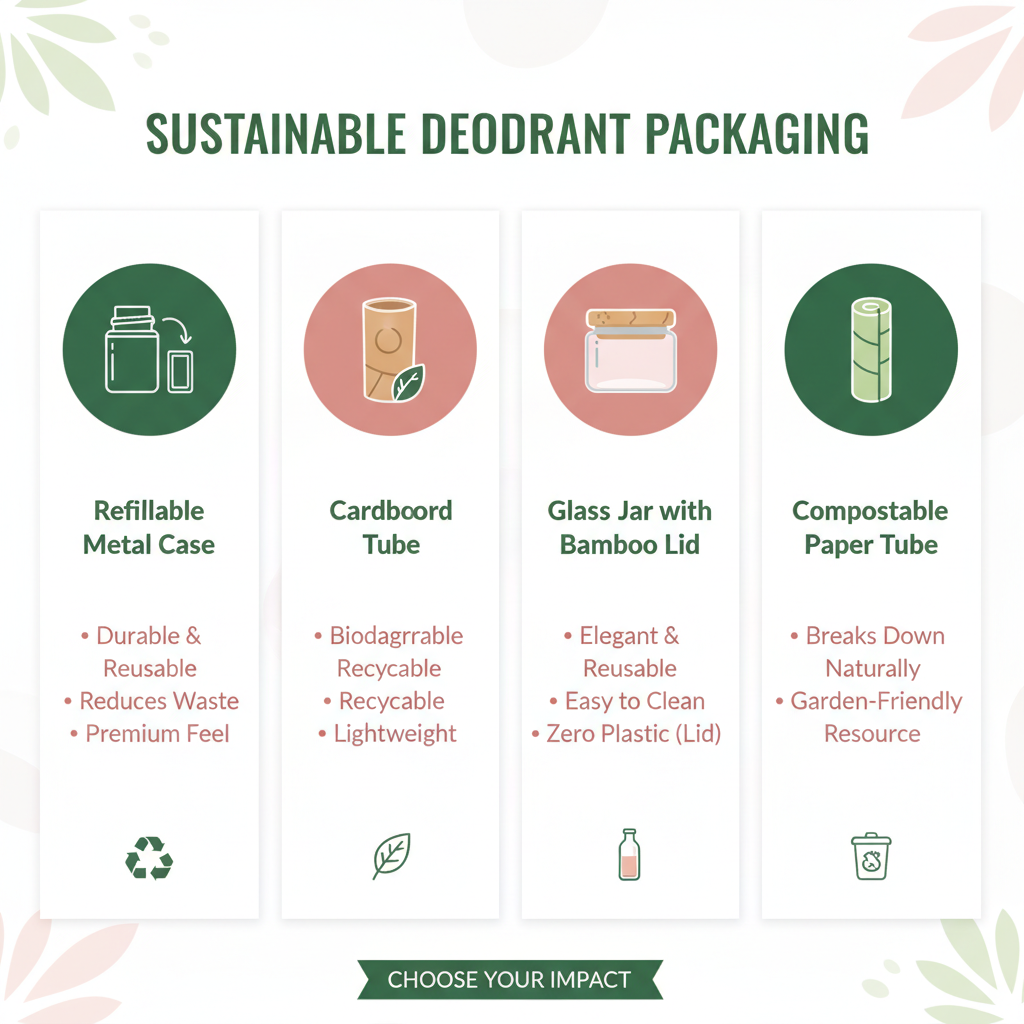
Refillable systems — The gold standard. Brands like Wild and Fussy use durable aluminium or recycled plastic cases designed to last for years, with refills that use minimal packaging (often compostable bamboo pulp or recycled cardboard).
Plastic-free packaging — Cardboard tubes, metal tins, or glass jars eliminate plastic entirely. Some brands offer deodorant in compostable paper tubes.
Recyclable materials — If plastic is used, look for single-material containers (not mixed plastics) that can actually be recycled in standard facilities.
Minimal packaging — Less material overall means less waste, regardless of the material type.
2. Ingredients
What’s inside the tube matters just as much as the tube itself.
Environmental Concerns with Conventional Ingredients:
- Triclosan — An antibacterial agent that accumulates in waterways and harms aquatic ecosystems. Largely phased out but still found in some products.
- Synthetic fragrances — Often petroleum-derived and can contain compounds that don’t break down in the environment.
- Microplastics — Some products contain tiny plastic particles that enter waterways and the food chain.
- Palm oil derivatives — Can contribute to deforestation if not sustainably sourced.
What to Look For:
Biodegradable ingredients — Plant-based components that break down naturally in the environment.
Sustainably sourced — Ingredients like coconut oil and shea butter should come from ethical, sustainable sources.
Simple formulations — Fewer ingredients often means less environmental processing and impact.
No harmful synthetics — Avoiding ingredients that persist in the environment or harm ecosystems.
3. Supply Chain and Manufacturing
A product can have great packaging and ingredients but still have a significant carbon footprint if it’s shipped around the world multiple times during production.
What to Consider:
Local manufacturing — Products made closer to where they’re sold have lower transportation emissions.
Ingredient sourcing — Where do the raw materials come from? How far do they travel?
Manufacturing practices — Does the company use renewable energy? Minimise waste? Treat wastewater properly?
Carbon footprint — Some brands calculate and offset their entire carbon footprint.
Transparency — Companies committed to sustainability are usually willing to share details about their supply chain.
4. Certifications
Certifications provide third-party verification of environmental and ethical claims. They’re not perfect, but they’re more reliable than self-proclaimed marketing terms.
Meaningful Certifications:
| Certification | What It Means |
|---|---|
| Leaping Bunny | No animal testing at any stage of production |
| B Corp | Meets rigorous standards of social and environmental performance |
| USDA Organic | Ingredients grown without synthetic pesticides or fertilisers |
| Ecocert | European organic certification for cosmetics |
| Fair Trade | Ingredients sourced ethically with fair wages |
| FSC (Forest Stewardship Council) | Paper/cardboard from responsibly managed forests |
| 1% for the Planet | Company donates 1% of sales to environmental causes |
Be Wary Of:
- Self-created “certifications” with official-looking logos
- Vague claims without third-party verification
- “Natural” or “green” labels (no legal meaning)
5. Company Practices
The brand behind the product matters. A truly eco-friendly deodorant comes from a company committed to sustainability throughout their operations.
What to Look For:
Corporate responsibility — Does the company have stated environmental goals? Do they report on progress?
Full product line — Is sustainability limited to one “green” product, or is it company-wide?
Transparency — Are they open about their practices, challenges, and areas for improvement?
Long-term thinking — Do they invest in sustainable innovation, or just follow trends?
Activism — Do they advocate for environmental causes beyond selling products?
Greenwashing Red Flags
Unfortunately, some brands use environmental language as marketing without genuine commitment. Watch for these warning signs.
Vague Language
Terms like “natural,” “green,” “eco,” and “clean” have no legal definitions. Any product can use them without meeting any standards. Look for specifics instead of buzzwords.
Single Attribute Focus
A brand might highlight one eco-friendly aspect (like “recycled plastic”) while ignoring other environmental concerns (like harmful ingredients or unethical sourcing). Genuine sustainability is comprehensive.
Hidden Trade-offs
Some “eco” swaps create new problems. For example, glass packaging is recyclable but heavier, increasing transportation emissions. Good brands consider the full picture.
Irrelevant Claims
“CFC-free” on aerosol deodorants sounds eco-friendly, but CFCs have been banned for decades—it’s like claiming your food is “arsenic-free.” Watch for claims that sound good but mean nothing.
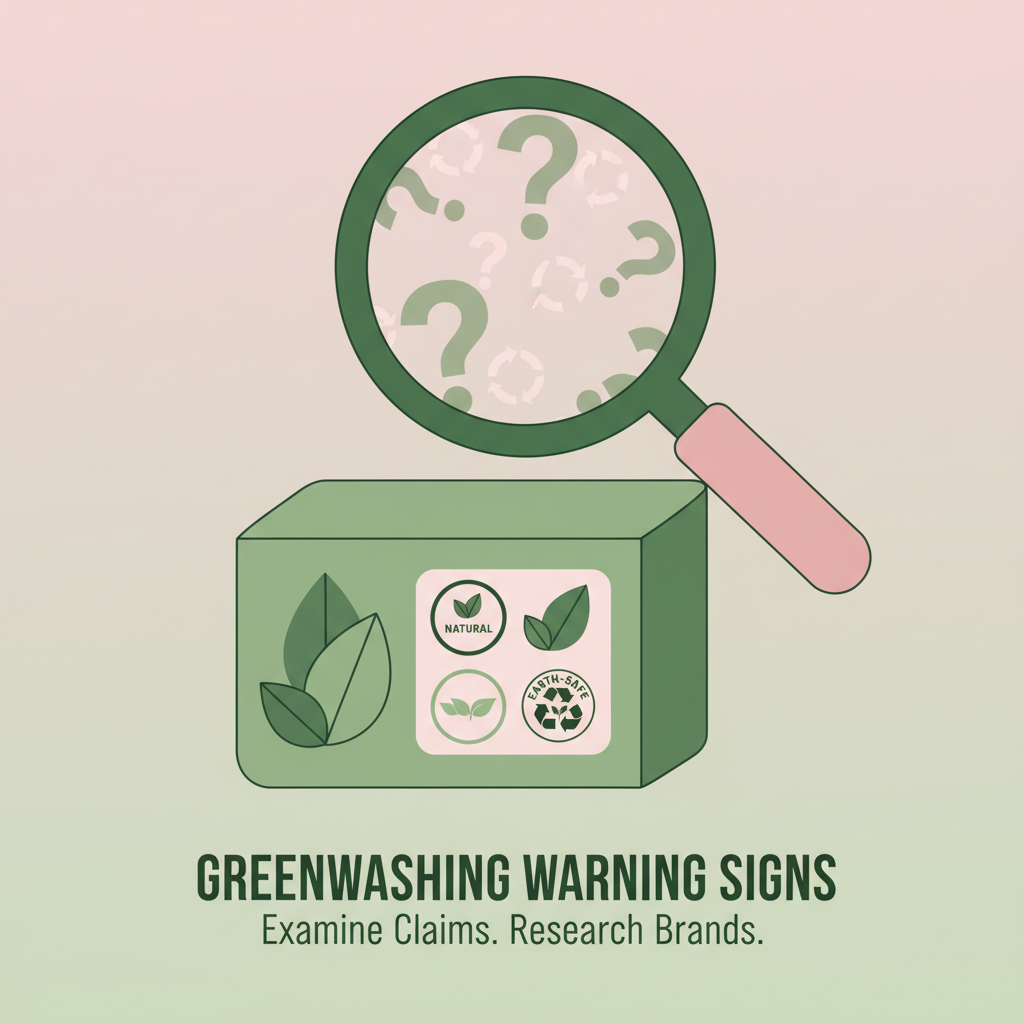
Misleading Imagery
Green colours, leaf graphics, and nature photography create an eco-friendly impression without any substance. Look past the design to the actual claims and certifications.
Making the Right Choice
With all this information, how do you actually choose a genuinely eco-friendly deodorant?
The Quick Assessment
When evaluating a product, consider:
- Packaging — Is it refillable, recyclable, or compostable?
- Ingredients — Are they biodegradable and sustainably sourced?
- Certifications — Are there legitimate third-party verifications?
- Transparency — Does the brand openly share information about their practices?
- Effectiveness — Does it actually work? (An eco-friendly product you don’t use isn’t helping anyone)
Prioritising What Matters
If you can’t find a product that excels in every area, prioritise:
Highest impact: Refillable or plastic-free packaging (packaging waste is the most visible environmental issue with deodorants)
Second priority: Clean, biodegradable ingredients
Third priority: Ethical sourcing and manufacturing
Brands Leading the Way
Several deodorant brands have made genuine commitments to sustainability:
Wild — Refillable aluminium cases with compostable bamboo pulp refills, B Corp certified
Fussy — Refillable system with recycled plastic cases and compostable refills
Native — Has introduced plastic-free packaging options and uses simple ingredients
by Humankind — Refillable system with plastic collected from the ocean
These brands aren’t perfect, but they’re making measurable progress toward more sustainable personal care.
The Bigger Picture
Choosing eco-friendly deodorant is one small part of sustainable living, but small choices add up. According to the EPA, personal care products contribute significantly to household waste, and changing habits here can create ripple effects.
Beyond Individual Choice
While consumer choices matter, systemic change requires more:
- Support legislation that holds companies accountable for packaging waste
- Demand transparency from brands about their environmental practices
- Share knowledge with friends and family about sustainable options
Progress Over Perfection
Don’t let perfect be the enemy of good. If you can’t find or afford the most sustainable option, choosing a somewhat better alternative still makes a difference. Every plastic container avoided, every refill purchased, every conscious choice matters.
The Bottom Line
A truly eco-friendly deodorant addresses multiple environmental concerns:
✓ Sustainable packaging — Refillable, recyclable, or compostable ✓ Clean ingredients — Biodegradable, sustainably sourced ✓ Responsible supply chain — Ethical sourcing, minimal transportation ✓ Verified claims — Legitimate third-party certifications ✓ Transparent brand — Open about practices and committed to improvement
Don’t be fooled by green marketing. Look for specifics, check certifications, and support brands that demonstrate genuine commitment to sustainability.
Your daily deodorant choice is a small act, but multiplied across millions of consumers, these choices drive market change. By choosing wisely, you’re voting for the kind of products and practices you want to see more of.
Ready to find your sustainable match? Explore our product reviews filtered by eco-credentials, or take our Find Your Perfect Deodorant quiz which includes sustainability preferences.