How to Make Your Own Natural Deodorant at Home
Step-by-step guide to making effective natural deodorant at home. Includes recipes for sensitive skin, troubleshooting tips, and guidance on customising your formula.
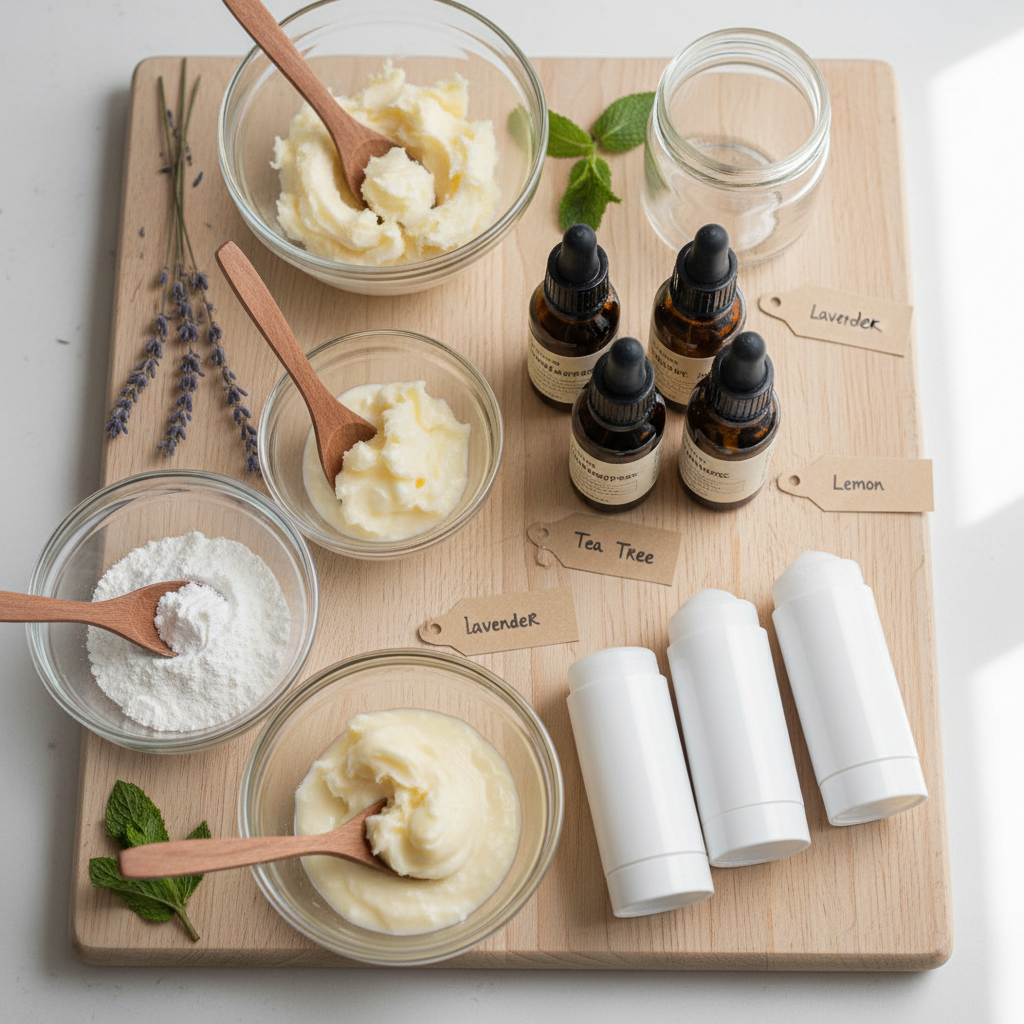
Making your own natural deodorant gives you complete control over ingredients, scent, and texture. It’s also surprisingly straightforward—most recipes require only 4-5 ingredients and take less than 20 minutes to prepare.
This guide provides tested recipes that actually work, explains the science behind each ingredient, and helps you troubleshoot common problems. Whether you’re looking to avoid specific ingredients, save money, or simply enjoy the satisfaction of making your own products, you’ll find everything you need here.
Why Make Your Own Deodorant?
Before diving into recipes, it’s worth understanding the advantages of DIY deodorant.
Complete ingredient control — You know exactly what’s going onto your skin. No hidden fragrance chemicals, no mysterious preservatives.
Customisation — Adjust the formula to your skin type, scent preferences, and climate. Too greasy? Reduce the oil. Causing irritation? Swap the baking soda for magnesium.
Cost savings — A batch of homemade deodorant costs roughly £2-3 and lasts 2-3 months. Premium natural deodorants often cost £10-15 for the same duration.
Reduced packaging — Reuse containers indefinitely, eliminating plastic waste entirely.
Satisfaction — There’s genuine pleasure in using something you made yourself.
Understanding the Ingredients
Each ingredient in natural deodorant serves a specific purpose. Understanding these roles helps you troubleshoot and customise.
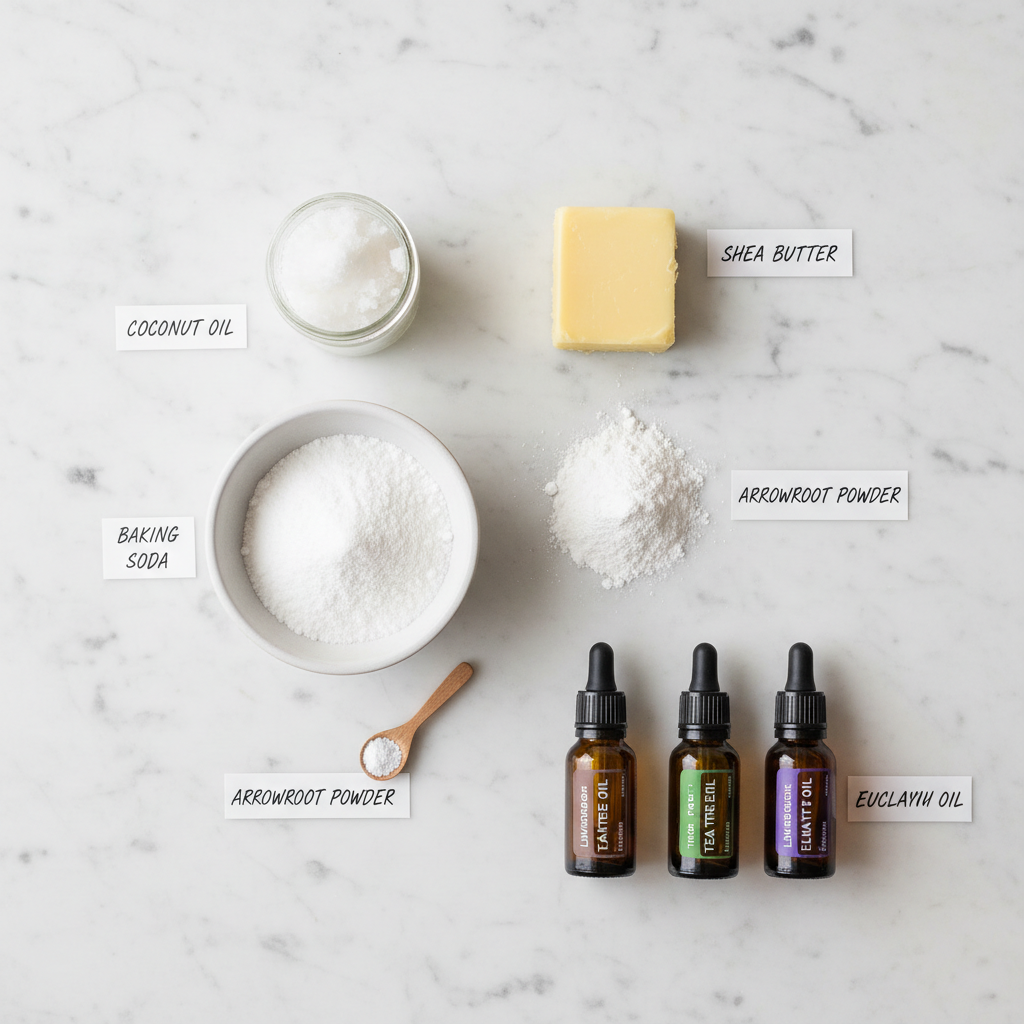
Odour Neutralisers
Baking soda (sodium bicarbonate) — The most effective natural odour neutraliser. Creates an alkaline environment that inhibits bacterial growth and neutralises acidic odour compounds. However, its high pH can irritate sensitive skin.
Magnesium hydroxide — A gentler alternative to baking soda. Works similarly but at a pH closer to skin’s natural level. Better for sensitive skin but slightly less effective.
Zinc oxide — Antibacterial and odour-absorbing. Very gentle on skin and provides mild sun protection. Often used in sensitive-skin formulas.
Moisture Absorbers
Arrowroot powder — Absorbs moisture without irritating skin. Creates a smooth, silky texture. The gentlest option for sensitive skin.
Cornstarch — Similar to arrowroot but slightly less gentle. More readily available and less expensive.
Tapioca starch — Another gentle option with good moisture absorption.
Kaolin clay — Absorbs both moisture and oil. Creates a drier feel. Good for people who sweat heavily.
Base Oils and Butters
Coconut oil — Antibacterial (contains lauric acid), moisturising, and creates good texture. Melts at body temperature, which can be problematic in warm climates.
Shea butter — Moisturising and soothing. Higher melting point than coconut oil, creating a firmer product.
Cocoa butter — Similar to shea butter with a harder consistency. Has a mild chocolate scent.
Candelilla wax or beeswax — Hardens the formula for stick application. Essential if you want a solid deodorant that doesn’t melt in warm weather.
Optional Additions
Essential oils — Add fragrance and, in some cases, antibacterial properties. Tea tree, lavender, and eucalyptus are popular choices.
Vitamin E oil — Antioxidant that extends shelf life and benefits skin.
Equipment Needed
You likely already own everything required:
- Small saucepan or double boiler
- Heat-safe glass or metal bowl
- Measuring spoons
- Mixing spoon or spatula
- Container for finished product (small jar, empty deodorant tube, or tin)
- Kitchen scale (helpful but not essential)
Recipe 1: Standard Formula
This balanced recipe works well for most people and provides reliable odour protection.
Ingredients
- 3 tablespoons coconut oil
- 2 tablespoons shea butter
- 3 tablespoons arrowroot powder
- 2 tablespoons baking soda
- 10-15 drops essential oil (optional)
Instructions
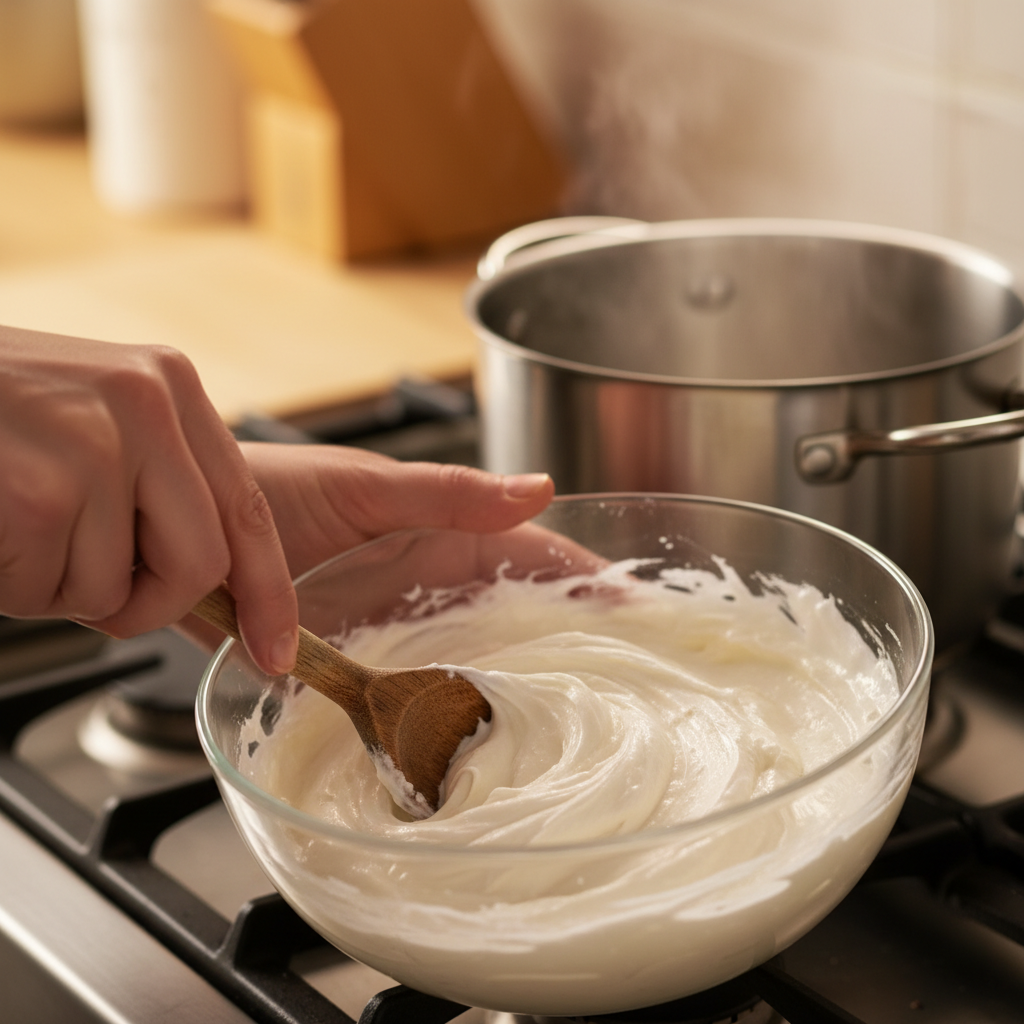
Step 1: Melt the oils
Create a double boiler by placing a heat-safe bowl over a saucepan with an inch of simmering water. Add the coconut oil and shea butter. Stir gently until fully melted (this takes 3-5 minutes).
Step 2: Remove from heat
Once melted, remove the bowl from heat and let it cool for 2-3 minutes. The mixture should still be liquid but not hot.
Step 3: Add dry ingredients
Sift the arrowroot powder and baking soda into the melted oils to prevent clumps. Stir thoroughly until completely combined and smooth.
Step 4: Add essential oils
If using essential oils, add them now while the mixture is still liquid but not hot (heat degrades essential oils). Stir well to distribute evenly.
Step 5: Pour and set
Pour the mixture into your chosen container. For a jar, simply pour and let set. For a deodorant tube, let the mixture cool until it starts to thicken slightly (about 5 minutes), then pour—this prevents separation.
Step 6: Let solidify
Leave at room temperature for several hours or refrigerate for 30-60 minutes until solid.
Yield
This recipe makes approximately 100g of deodorant, enough for 2-3 months of daily use.
Recipe 2: Sensitive Skin Formula (Baking Soda-Free)
If baking soda causes irritation, this gentler formula provides effective odour control without the pH issues.
Ingredients
- 3 tablespoons coconut oil
- 2 tablespoons shea butter
- 3 tablespoons arrowroot powder
- 2 tablespoons magnesium hydroxide powder
- 1 tablespoon zinc oxide powder
- 10-15 drops essential oil (optional—consider skipping for maximum gentleness)
Instructions
Follow the same method as Recipe 1. The magnesium hydroxide and zinc oxide work together to provide odour protection comparable to baking soda without the irritation potential.
Notes
- Magnesium hydroxide is sold as “milk of magnesia” in liquid form or as powder for cosmetic use. Use the powder form for this recipe.
- Zinc oxide should be non-nano cosmetic grade.
Recipe 3: Firm Stick Formula
For a solid stick that won’t melt in warm weather, add wax to the formula.
Ingredients
- 2 tablespoons coconut oil
- 2 tablespoons shea butter
- 1 tablespoon beeswax or candelilla wax
- 3 tablespoons arrowroot powder
- 2 tablespoons baking soda (or magnesium hydroxide for sensitive skin)
- 10-15 drops essential oil (optional)
Instructions
- Melt the coconut oil, shea butter, and wax together using the double boiler method. The wax takes longer to melt—be patient.
- Once fully melted and combined, remove from heat.
- Let cool for 2-3 minutes, then add the dry ingredients.
- Stir thoroughly until smooth.
- Add essential oils if using.
- Pour into an empty deodorant tube immediately—the wax makes this mixture set faster than oil-only formulas.
- Let set completely before using (2-3 hours minimum).
Notes
- This formula is firmer and may require slight warming against skin before application.
- Use candelilla wax for a vegan formula.
Recipe 4: Cream Formula (No Tube Required)
If you prefer a cream you apply with fingers, skip the wax entirely for a softer product.
Ingredients
- 4 tablespoons coconut oil
- 2 tablespoons shea butter
- 2 tablespoons arrowroot powder
- 1.5 tablespoons baking soda (or magnesium hydroxide)
- 10-15 drops essential oil (optional)
Instructions
Follow Recipe 1’s method. Store in a small jar or tin. Apply a pea-sized amount with your fingertips.
Notes
- This formula stays soft and creamy at room temperature.
- In hot weather, store in the refrigerator to maintain consistency.
Essential Oil Combinations
If you want to add fragrance, here are tested combinations that work well:
| Profile | Essential Oils | Drops Each |
|---|---|---|
| Fresh | Lemon + eucalyptus + peppermint | 5 + 5 + 3 |
| Calming | Lavender + chamomile | 8 + 5 |
| Woodsy | Cedarwood + bergamot + vetiver | 5 + 5 + 3 |
| Floral | Geranium + lavender + ylang ylang | 5 + 5 + 3 |
| Citrus | Orange + grapefruit + lemon | 5 + 5 + 3 |
| Unscented | None | — |
Essential Oil Safety
- Always use pure essential oils, not fragrance oils
- Keep total essential oil content below 2% of the formula (roughly 15 drops per 100g)
- Avoid essential oils known to cause photosensitivity (bergamot, lemon, lime) if your underarms will be exposed to sun
- Patch test new essential oils before using in deodorant
Application Tips
Homemade deodorant requires slightly different application technique than commercial products.
Apply to clean, dry skin — Best results come from applying immediately after showering and drying thoroughly.
Use the right amount — For jar/cream formulas, a pea-sized amount per underarm is sufficient. For sticks, 2-3 swipes.
Let it absorb — Wait 30-60 seconds before dressing to allow absorption and prevent transfer to clothing.
Warm it first if needed — Firm stick formulas may need a few seconds against your skin to soften before gliding smoothly.
Storage and Shelf Life
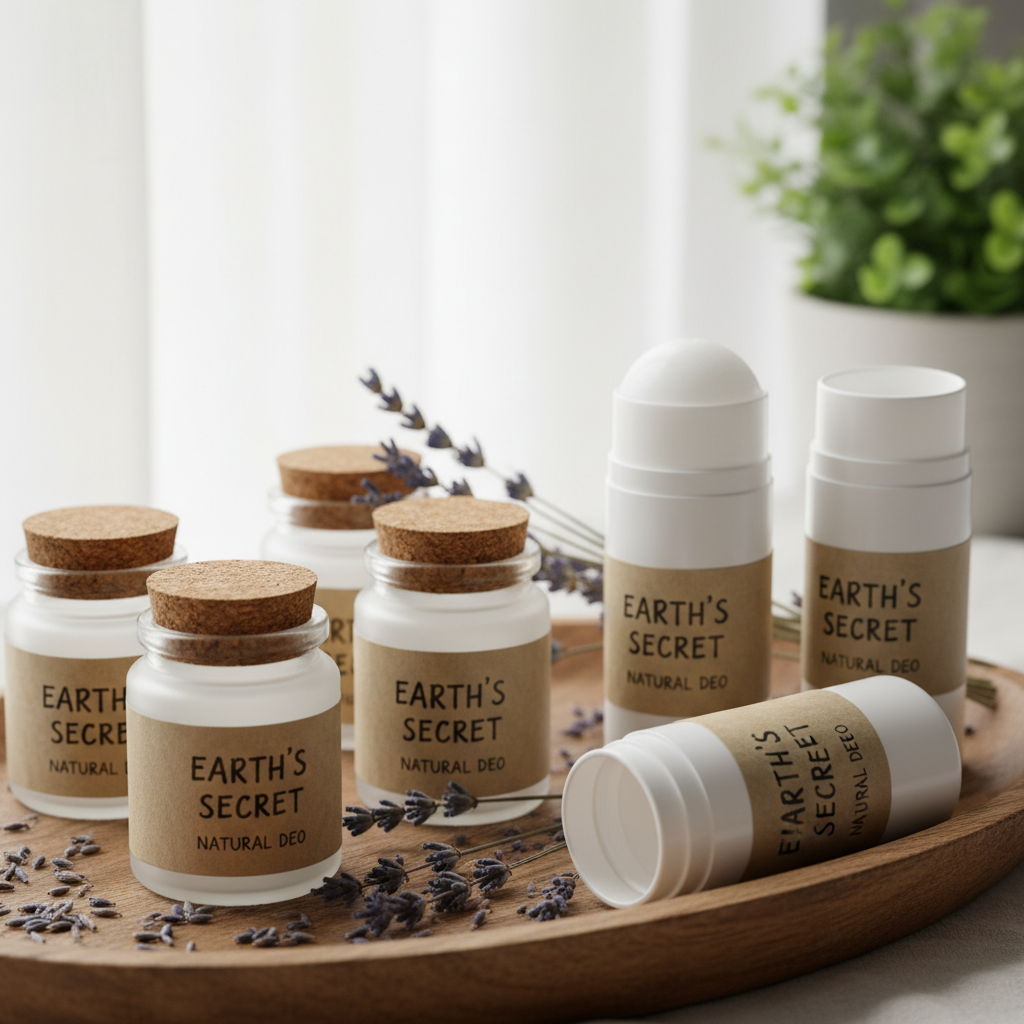
Container choice — Glass jars, metal tins, or empty deodorant tubes all work well. Avoid plastic if using essential oils, as some oils can degrade certain plastics over time.
Storage location — Keep in a cool, dry place. In hot weather or climates, refrigeration prevents melting and extends shelf life.
Shelf life — Properly stored homemade deodorant lasts 3-6 months. If it develops an off smell or changes colour significantly, discard and make a fresh batch.
Extending shelf life — Adding a few drops of vitamin E oil (or opening a vitamin E capsule) provides antioxidant protection and can extend shelf life by several months.
Troubleshooting Common Problems
”My deodorant melted”
Cause: Coconut oil melts at 24°C (76°F).
Solution: Add beeswax or candelilla wax (1 tablespoon per batch) to raise the melting point. Alternatively, store in the refrigerator.
”It’s too hard and won’t glide on”
Cause: Too much wax or not enough oil.
Solution: Remelt the batch and add 1 tablespoon more coconut oil. For future batches, reduce wax or increase oils.
”My skin is irritated”
Cause: Usually baking soda sensitivity, though essential oils can also cause reactions.
Solution: Switch to the sensitive skin formula using magnesium hydroxide. If irritation persists, try an unscented version. Always patch test before applying to underarms.
”It leaves white marks on clothes”
Cause: Excess powder or baking soda.
Solution: Apply less product, wait longer before dressing, or reduce baking soda/arrowroot slightly in your next batch.
”It doesn’t control odour well enough”
Cause: May need more active ingredients, or you may be in an adjustment period from antiperspirant.
Solution:
- If recently switched from antiperspirant, give your body 2-4 weeks to adjust
- Try increasing baking soda slightly (if your skin tolerates it)
- Add a few drops of tea tree oil for antibacterial boost
- Apply more frequently during the transition period
”The texture is grainy”
Cause: Powders not fully incorporated, or mixture cooled too quickly.
Solution: Next batch, sift dry ingredients before adding. Stir continuously as the mixture cools to prevent separation.
”The ingredients separated”
Cause: Poured into container while too hot, causing oils to separate from powders as they cooled.
Solution: Let mixture cool and thicken slightly before pouring. If already separated, remelt and stir continuously while cooling.
Adjusting for Your Climate
Hot climates (above 25°C regularly):
- Add 1 tablespoon beeswax or candelilla wax
- Store in refrigerator
- Consider the firm stick formula
Cold climates:
- Skip the wax for softer, easier-to-apply product
- Use more coconut oil for creamier texture
Humid climates:
- Add extra arrowroot powder for better moisture absorption
- Consider adding kaolin clay
The Adjustment Period
If you’re switching from antiperspirant to homemade deodorant, expect a transition period of 2-4 weeks. During this time:
- You may sweat more as blocked pores clear
- Body odour may seem stronger initially
- You might need to reapply more frequently
This is temporary. Once your body adjusts, homemade deodorant typically provides effective, long-lasting protection.
For more on navigating this transition, see our guide on switching to natural deodorant.
Cost Comparison
Here’s what a batch of homemade deodorant actually costs:
| Ingredient | Amount Used | Approximate Cost |
|---|---|---|
| Coconut oil | 3 tbsp | £0.30 |
| Shea butter | 2 tbsp | £0.50 |
| Arrowroot powder | 3 tbsp | £0.40 |
| Baking soda | 2 tbsp | £0.05 |
| Essential oils | 15 drops | £0.50 |
| Total | — | £1.75 |
This batch lasts 2-3 months. Compare to £10-15 for premium natural deodorant covering the same period.
When DIY Might Not Be Right for You
Homemade deodorant isn’t for everyone. Consider purchasing instead if:
- You don’t enjoy DIY projects
- You need completely consistent results
- You travel frequently and want airport-friendly packaging
- You have severe skin sensitivities requiring dermatologist-tested formulas
- You simply prefer the convenience of ready-made products
There’s no shame in buying natural deodorant rather than making it. The goal is finding what works for your body and lifestyle.
The Bottom Line
Making natural deodorant at home is straightforward, cost-effective, and gives you complete control over what goes on your skin. Start with the standard formula, adjust based on how your skin responds, and don’t be discouraged if your first batch isn’t perfect—refinement is part of the process.
Key points to remember:
- Understand ingredient roles — Each component serves a purpose
- Start with the standard recipe — Adjust from there based on your needs
- Baking soda alternatives exist — Sensitive skin doesn’t mean ineffective deodorant
- Climate matters — Adjust wax content for your environment
- Expect an adjustment period — Especially if switching from antiperspirant
The satisfaction of using a product you made yourself—one that works, smells exactly how you want, and contains only ingredients you chose—is worth the small effort involved.
Ready to compare your homemade creation to commercial options? Browse our product reviews to see how store-bought natural deodorants stack up, or learn more about deodorant ingredients to deepen your formulation knowledge.