Understanding Deodorant Ingredients: What to Look For and What to Avoid
A complete guide to decoding deodorant labels - learn which ingredients are safe, which to avoid, and how to make informed choices for your health and the environment.

You recycle, you buy organic, you’ve swapped single-use plastics for reusables. But have you examined what’s actually in the deodorant you apply to one of your body’s most sensitive areas every day?
Those hard-to-pronounce ingredients on the back of your deodorant stick aren’t just random chemistry—they determine how the product works, how it affects your skin, and what impact it has on the environment. Understanding them puts you in control.
This guide breaks down common deodorant ingredients into two categories: the beneficial natural ones and the synthetic red flags worth avoiding. By the end, you’ll read labels with confidence.
How Deodorant Ingredients Work
Before diving into specific ingredients, it helps to understand what deodorants actually need to do:
- Control odour — Either by killing odour-causing bacteria or neutralising the acidic compounds they produce
- Manage moisture — Absorbing sweat to keep you feeling dry
- Condition skin — Protecting and soothing the delicate underarm area
- Provide fragrance — Making you smell pleasant (optional but popular)
Different ingredients tackle different jobs. The best formulations combine several to create effective, comfortable products.
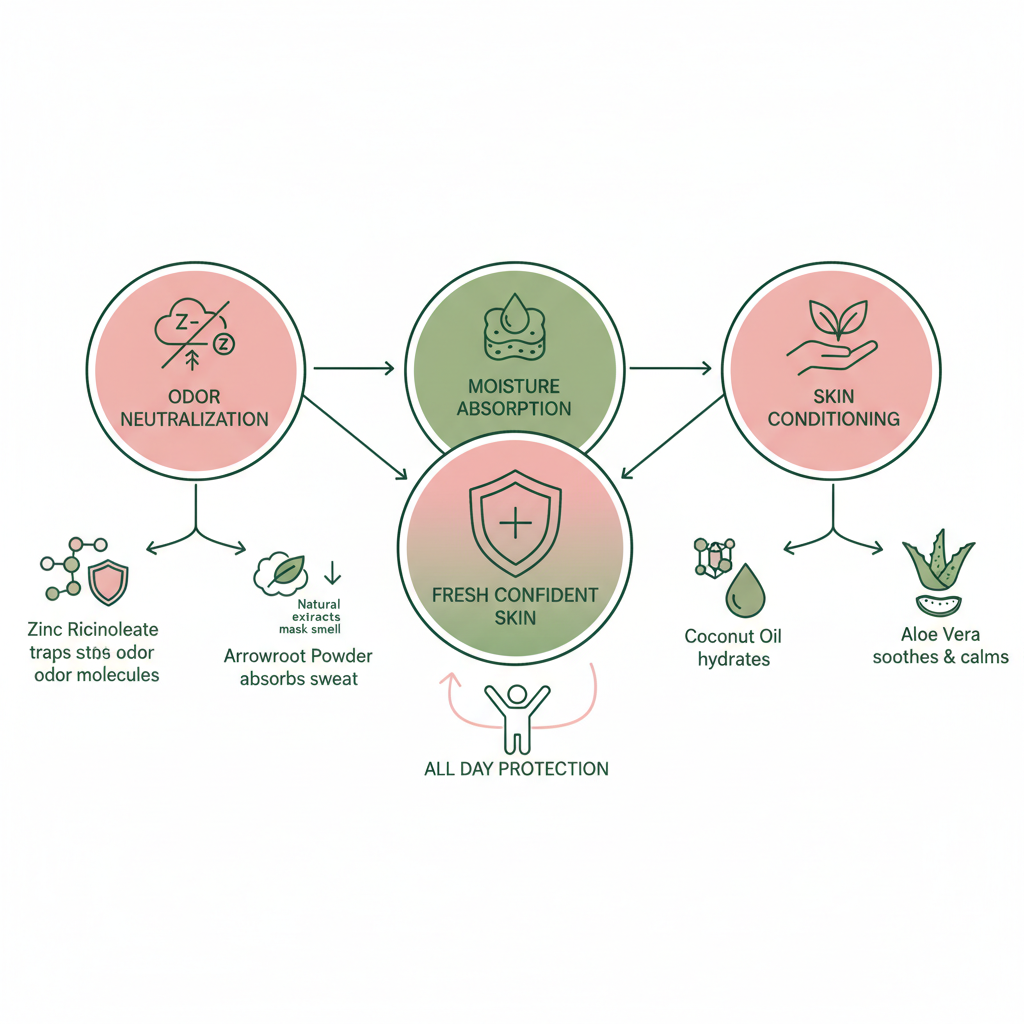
Natural Ingredients: The Good Stuff
These plant-based and mineral ingredients have become the foundation of modern natural deodorants. They’re generally well-tolerated, effective, and environmentally friendly.
Odour-Fighting Ingredients
Baking Soda (Sodium Bicarbonate) The workhorse of natural deodorants. Baking soda neutralises the acidic compounds that cause body odour, creating an alkaline environment where odour-causing bacteria struggle to thrive.
Consideration: Its high pH (8-9) can irritate sensitive skin. If you react, look for baking soda-free alternatives.
Magnesium Hydroxide An increasingly popular alternative to baking soda. It neutralises odour effectively but with a gentler pH that’s closer to your skin’s natural level.
Best for: Those with sensitive skin who react to baking soda.
Zinc Compounds Zinc ricinoleate and zinc oxide have natural antibacterial properties and can neutralise odour molecules directly. Well-tolerated by most skin types.
Found in: Many natural and conventional deodorants.
Activated Charcoal Highly porous charcoal that traps odour molecules and absorbs excess moisture. It’s become popular in detox-focused formulations.
Best for: Those who want extra absorption without aluminium.
Moisture-Absorbing Ingredients
Arrowroot Powder A gentle, naturally derived starch that absorbs moisture effectively without irritating skin. Creates a smooth, silky application feel.
Tapioca Starch Similar to arrowroot, this plant-based starch keeps underarms feeling dry and improves product texture.
Cornstarch Another effective natural absorbent, though some people with corn sensitivities should avoid it.
Kaolin Clay A gentle white clay that absorbs moisture and oil. Often found in cream and paste deodorants.
Skin-Conditioning Ingredients
Coconut Oil Does double duty—its lauric acid content provides antibacterial action while moisturising and protecting skin. A staple in natural deodorant formulations.
Shea Butter Rich in vitamins A and E, shea butter nourishes and soothes underarm skin. Particularly beneficial for those prone to irritation.
Jojoba Oil Closely mimics skin’s natural sebum, making it easily absorbed and non-comedogenic. Helps balance skin without clogging pores.
Aloe Vera Known for its soothing, anti-inflammatory properties. Helps calm irritated skin and provides light hydration.
Natural Fragrances
Essential Oils Plant-derived oils like lavender, tea tree, eucalyptus, and citrus provide natural scent while offering additional benefits:
- Tea tree: Antibacterial properties
- Lavender: Calming and antimicrobial
- Eucalyptus: Cooling and refreshing
- Citrus oils: Uplifting and naturally deodorising
Consideration: Even natural essential oils can cause reactions in some people. Fragrance-free options exist for the most sensitive.

Synthetic Ingredients: The Red Flags
These ingredients are commonly found in conventional deodorants and antiperspirants. While they’re effective, concerns about health and environmental impact have led many consumers to seek alternatives.
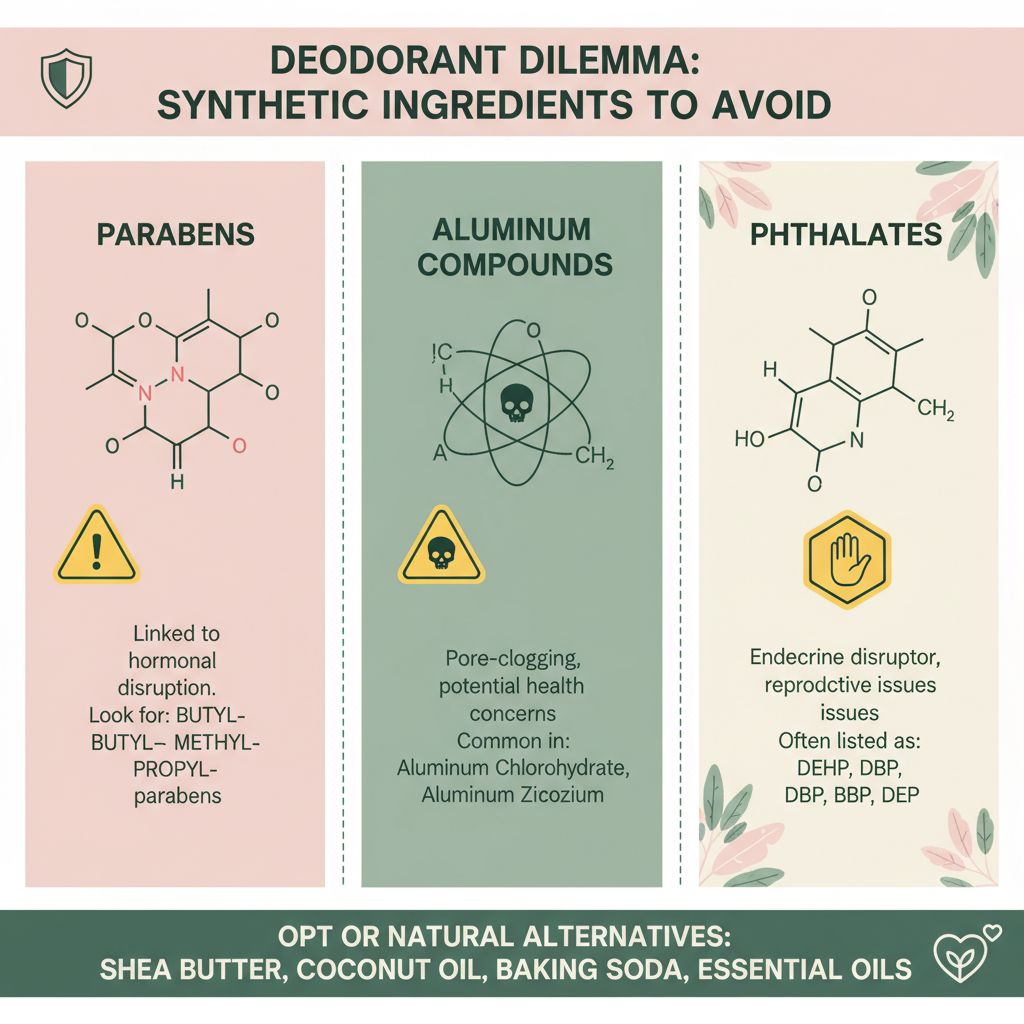
Aluminium Compounds
What they are: Aluminium chloride, aluminium chlorohydrate, aluminium zirconium tetrachlorohydrex
What they do: These are the active ingredients in antiperspirants. They work by forming temporary gel plugs in your sweat ducts, physically blocking sweat from reaching the skin’s surface.
The concerns:
- Some studies have suggested possible links to breast cancer, though research remains inconclusive
- Potential connections to Alzheimer’s disease have been studied, though major health organisations haven’t established a definitive link
- Can cause irritation, particularly on freshly shaved skin
- May cause yellowing of white clothing when combined with sweat proteins
The bottom line: While major health bodies haven’t concluded that aluminium is harmful, many people prefer to avoid it as a precaution. If you want to stop sweating (not just control odour), aluminium is currently the only proven method.
Parabens
What they are: Methylparaben, ethylparaben, propylparaben, butylparaben
What they do: Preservatives that prevent bacterial and fungal growth, extending product shelf life.
The concerns:
- Parabens can mimic oestrogen in the body (they’re endocrine disruptors)
- Studies have detected parabens in breast tumour tissue, though causation hasn’t been established
- Environmental concerns about accumulation in waterways
The bottom line: While the EU and FDA still consider parabens safe at current levels, many consumers and brands are moving away from them. Plenty of effective paraben-free options exist.
Triclosan
What it is: An antibacterial and antifungal agent
What it does: Kills bacteria on the skin to prevent odour
The concerns:
- The FDA banned triclosan from antibacterial soaps in 2016 due to lack of proven benefit and potential risks
- May contribute to antibiotic resistance
- Environmental red flag—accumulates in waterways and harms aquatic ecosystems
- Classified as a pesticide by the EPA
The bottom line: Triclosan has largely been phased out of deodorants, but check older products or discount brands. There’s little reason to use it when safer alternatives exist.
Artificial Fragrances
What they are: Listed simply as “fragrance,” “parfum,” or “perfume”
What they do: Provide scent to mask body odour
The concerns:
- “Fragrance” is a catch-all term that can hide dozens or even hundreds of individual synthetic chemicals
- Common cause of allergic contact dermatitis and skin irritation
- Some fragrance chemicals are potential endocrine disruptors
- Phthalates (often hidden in fragrances) have been linked to hormone disruption
The bottom line: If you have sensitive skin or want to know exactly what you’re applying, avoid products with “fragrance” listed and opt for those scented only with essential oils—or go fragrance-free entirely.
Propylene Glycol
What it is: A petroleum-derived synthetic compound
What it does: Helps products glide on smoothly and enhances ingredient absorption
The concerns:
- Can cause allergic reactions in sensitive individuals (estimated 0.8-3.5% of people)
- As a penetration enhancer, it may help other ingredients (including problematic ones) absorb more deeply
- Derived from petroleum, raising sustainability concerns
The bottom line: Not the worst offender, but worth avoiding if you have sensitive skin or prefer to skip petroleum-derived ingredients.
PEGs (Polyethylene Glycols)
What they are: Compounds used as emulsifiers, thickeners, and moisture carriers
What they do: Help blend ingredients together and carry moisture
The concerns:
- Manufacturing process can leave traces of ethylene oxide and 1,4-dioxane, both potential carcinogens
- Can enhance penetration of other ingredients through the skin
- Petroleum-derived
The bottom line: The contamination risk depends on manufacturing quality. Many natural brands avoid PEGs entirely.
Reading Deodorant Labels Like a Pro
Now that you know what to look for, here’s how to quickly assess any product:
The Quick Scan Method
Step 1: Check the first five ingredients Ingredients are listed by concentration. The first five make up the bulk of the product. These should be recognisable and ideally plant-based.
Step 2: Look for red flags Scan for aluminium compounds, parabens, triclosan, “fragrance/parfum,” and propylene glycol.
Step 3: Assess the overall length Shorter ingredient lists are generally better. If a deodorant needs 30+ ingredients, question why.
Step 4: Research unfamiliar terms Don’t recognise something? A quick search can tell you whether it’s a harmless plant extract or something worth avoiding.
Helpful Label Claims
Trustworthy claims:
- “Aluminium-free” — Means no sweat-blocking aluminium compounds
- “Baking soda-free” — Good for sensitive skin sufferers
- “Certified organic” — Verified by third-party organisations
- “Fragrance-free” — Contains no added scent (natural or synthetic)
Marketing terms to question:
- “Natural” — Has no legal definition; verify by checking ingredients
- “Dermatologist tested” — Doesn’t mean approved or recommended
- “Hypoallergenic” — No standard definition; can still contain allergens
- “Clean” — Marketing buzzword without regulatory meaning
Sample Label Analysis
Conventional antiperspirant might list: Aluminium Zirconium Tetrachlorohydrex Gly, Cyclopentasiloxane, PPG-14 Butyl Ether, Stearyl Alcohol, Fragrance, Hydrogenated Castor Oil…
Red flags: Aluminium compound, vague “fragrance”
Natural deodorant might list: Cocos Nucifera (Coconut) Oil, Maranta Arundinacea (Arrowroot) Powder, Sodium Bicarbonate, Theobroma Cacao (Cocoa) Seed Butter, Candelilla Cera (Candelilla Wax), Lavandula Angustifolia (Lavender) Oil…
All recognisable, plant-based ingredients
Making the Switch
If you’re transitioning from conventional to natural deodorant, here’s what to expect:
The Adjustment Period
Your body has adapted to antiperspirant blocking your sweat glands. When you remove that blockage:
- Week 1-2: You may sweat and smell more as your body recalibrates
- Week 2-3: Things typically begin to normalise
- Week 3-4: Most people find their natural deodorant working effectively
Tips for Success
- Start on a weekend — Give yourself time to adjust without work pressure
- Stay hydrated — Proper hydration helps regulate body chemistry
- Wear breathable fabrics — Natural fibres help manage moisture
- Be patient — The transition is temporary
If Natural Deodorant Doesn’t Work
Not every formula works for every body. If one product isn’t effective after 3-4 weeks:
- Try a different active ingredient (baking soda vs magnesium)
- Experiment with different formats (stick vs cream)
- Consider that some people need stronger protection for certain situations
There’s no shame in using conventional products when necessary. Even reducing your exposure part-time is beneficial.
The Environmental Angle
Choosing cleaner deodorant ingredients isn’t just about personal health—it’s about environmental impact too.
Why It Matters
Everything you wash off eventually enters waterways. Ingredients like triclosan accumulate in aquatic ecosystems and harm marine life. Synthetic fragrances and preservatives persist in the environment.
Eco-Friendly Choices
- Biodegradable ingredients — Plant-based formulas break down naturally
- Sustainable packaging — Refillable cases, cardboard tubes, or glass jars
- Cruelty-free certification — No animal testing
- Reef-safe formulations — Free from ingredients harmful to marine ecosystems
By choosing products with cleaner ingredients, you’re reducing your environmental footprint with every application.
The Bottom Line
Understanding deodorant ingredients transforms label-reading from a confusing chore into an empowering practice. You don’t need a chemistry degree—just a basic knowledge of what to embrace and what to avoid.
Embrace:
- Magnesium hydroxide, zinc compounds, activated charcoal (odour control)
- Arrowroot, tapioca starch, kaolin clay (moisture absorption)
- Coconut oil, shea butter, aloe vera (skin conditioning)
- Essential oils (natural fragrance)
Approach with caution:
- Baking soda (effective but can irritate sensitive skin)
Avoid when possible:
- Aluminium compounds
- Parabens
- Triclosan
- Synthetic fragrances (“parfum”)
- Propylene glycol
- PEGs
Every product you choose is a vote for the kind of personal care industry you want to support. By selecting deodorants with transparent, safe ingredients, you’re protecting your health, respecting your skin, and caring for the planet.
The choice is in your hands—and now you have the knowledge to make it wisely.
Ready to find products that meet these standards? Browse our product reviews or take our Find Your Perfect Deodorant quiz for personalised recommendations.