Refillable Deodorants: Hype or Genuine Impact?
A deep dive into refillable deodorants - do they actually reduce waste, are they cost-effective, and should you make the switch? We examine the evidence.

We all want to start the day fresh and confident. But increasingly, environmentally conscious consumers are asking an uncomfortable question: what happens to all those empty deodorant containers?
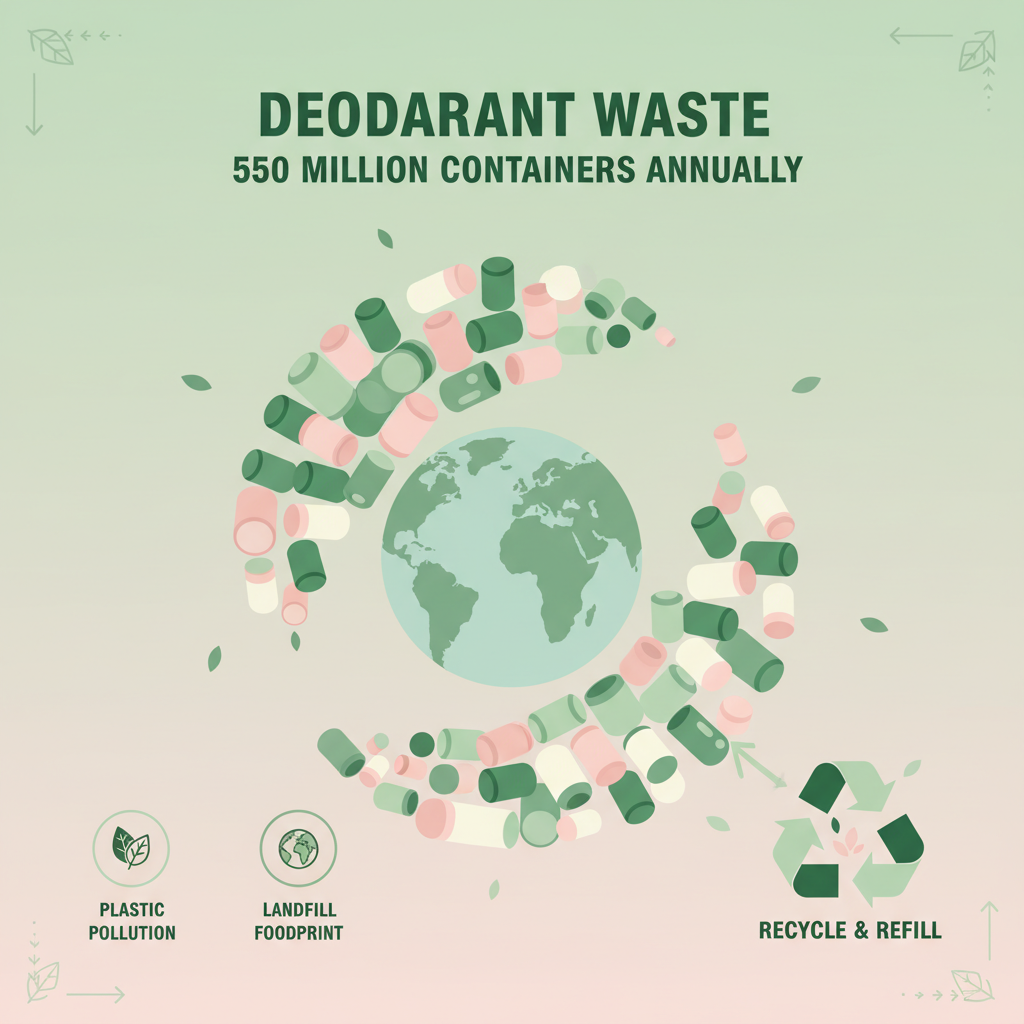
The answer isn’t pretty. An estimated 550 million plastic deodorant dispensers are discarded globally each year—enough to circle the Earth 1.5 times. Most end up in landfills, where they’ll take 450+ years to decompose, or worse, in our oceans.
Enter refillable deodorants. These products promise to dramatically reduce waste by replacing disposable containers with reusable cases and minimal-packaging refills. But are they genuinely impactful, or just clever marketing riding the sustainability wave?
Let’s examine the evidence.
The Deodorant Waste Problem
Before evaluating solutions, we need to understand the scale of the problem.
The Numbers
- 800+ million deodorant containers discarded annually in the UK alone
- 102 tubes — the average number of deodorants a person uses in their lifetime
- 450+ years — how long a plastic deodorant container takes to decompose
- 9% — the percentage of all plastic ever produced that has actually been recycled
Why Deodorant Containers Are Particularly Problematic
Conventional deodorant packaging isn’t just plastic—it’s complex plastic. A typical container includes:
- Multiple types of plastic fused together
- Metal springs in twist-up mechanisms
- Residual product contaminating materials
This complexity makes them virtually impossible to recycle through standard municipal systems. Even containers marked with recycling symbols often end up in landfill because facilities can’t economically process them.
How Refillable Deodorants Work
The concept is elegantly simple: separate the container from the product.
The System
The case: A durable container made from materials like aluminium, stainless steel, or high-quality recycled plastic. Designed to last for years—potentially a decade or more with proper care.
The refill: The actual deodorant product, packaged in minimal materials. Leading brands use:
- Compostable bamboo pulp
- Recycled cardboard
- Thin, recyclable plastic
- Paper-based wrapping
The process: When your deodorant runs out, you pop out the empty refill and insert a new one. The case stays with you indefinitely.
Leading Refillable Brands
Wild — Brushed aluminium cases with bamboo pulp refills that are fully compostable
Fussy — Cases made from recycled ocean plastic with compostable refills
by Humankind — Sleek design with plastic-free refill options
Native — Introduced refillable options alongside their traditional line
Evaluating the Impact: The Evidence
So do refillable deodorants actually make a difference? Let’s look at the data.
Waste Reduction
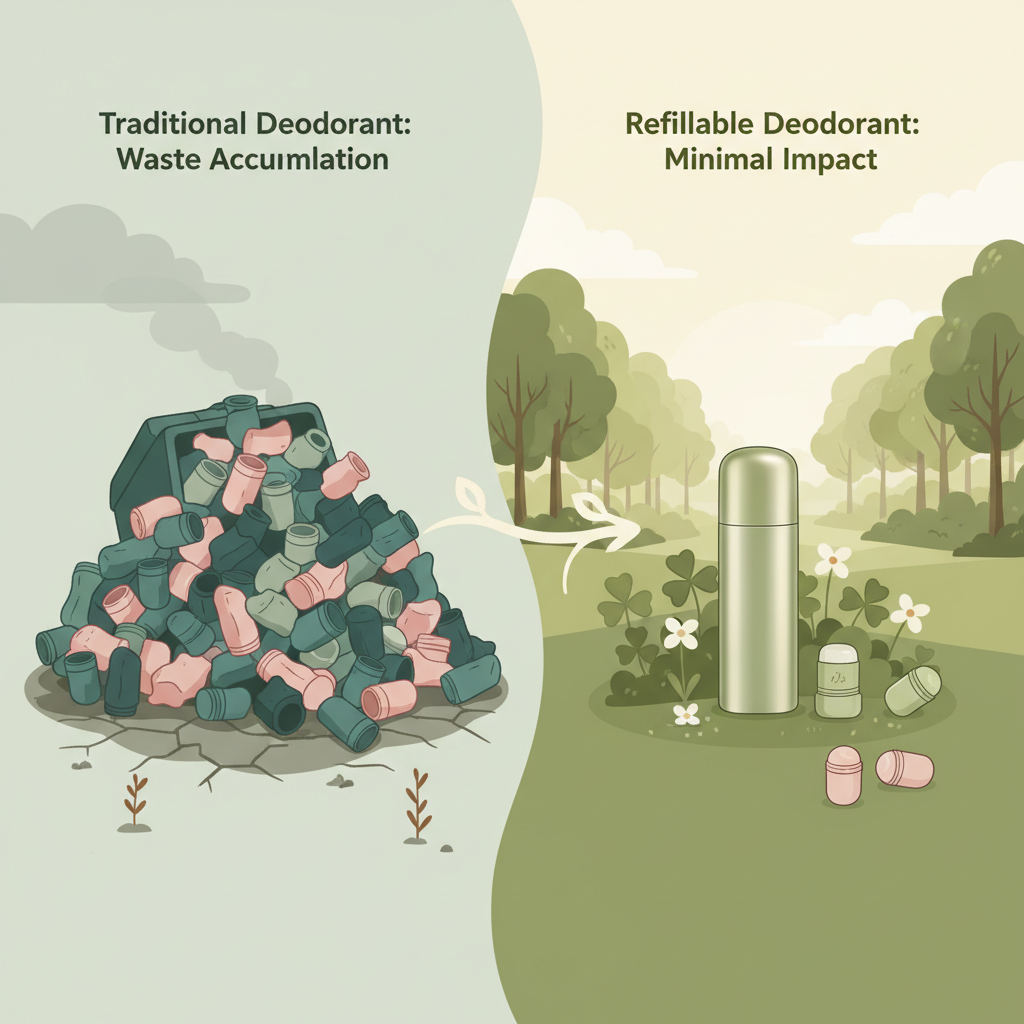
The primary claim is straightforward: using one case repeatedly instead of discarding containers reduces waste. The numbers support this:
- A single refillable case can replace 50+ conventional containers over its lifetime
- Refills use approximately 80% less material than full containers
- If every UK consumer switched, plastic waste could be reduced by 300+ tonnes annually (Unilever estimate)
Verdict: The waste reduction claims are legitimate. Even accounting for refill packaging, the reduction is substantial.
Carbon Footprint
This is where it gets more nuanced. Manufacturing a durable aluminium or steel case is more energy-intensive than producing a single plastic container. Transportation of heavier cases also generates more emissions per unit.
However:
- These upfront costs are amortised over years of use
- After approximately 5-6 refill cycles, the environmental break-even point is typically reached
- Every subsequent use represents net environmental benefit
Verdict: Initial carbon cost is higher, but long-term impact is positive—provided you actually keep using the case.
Ingredient Quality
An interesting secondary benefit: most refillable deodorant brands also prioritise cleaner formulations.
- Fewer preservatives (smaller batches used more quickly)
- Natural, biodegradable ingredients
- No aluminium, parabens, or synthetic fragrances
- Less water pollution when washed away
This isn’t inherent to the refillable model, but the brands leading the refillable movement tend to be the same ones committed to ingredient transparency.
Verdict: Correlation rather than causation, but a meaningful additional benefit.
The Cost Question
Sustainability is wonderful, but practicality matters. Are refillable deodorants cost-effective?
Upfront Cost
Refillable starter kits typically cost more than a single conventional deodorant. You’re paying for a durable case designed to last years, plus your first refill.
Long-Term Economics
The calculation changes when you factor in refill costs. Refills cost significantly less than starter kits, so over 3-4 refill cycles, you start seeing savings compared to buying new conventional deodorants every time.
Over a year, refillables often match or beat conventional options on cost—especially compared to premium conventional brands. The exact savings depend on your usage and which brands you’re comparing, so check current prices on brand websites.
Verdict: Competitive long-term, though the upfront investment may be a barrier for some.
Common Myths and Misconceptions
”Refillable deodorants don’t work as well”
This conflates two separate things: the refillable format and natural formulations. The container type doesn’t affect efficacy—the formula does. Many refillable brands use highly effective natural ingredients, though there may be an adjustment period if you’re switching from antiperspirant.
”They’re just a trend”
Refillable products aren’t new—milk, beer, and countless other products were sold in refillable containers for generations. What’s new is applying this proven model to personal care. The market growth (projected to reach billions by 2027) suggests staying power, not fad.
”The refills still create waste”
True, but dramatically less. A compostable bamboo refill that breaks down in months is fundamentally different from a plastic container that persists for centuries. Perfect shouldn’t be the enemy of much better.
”It’s inconvenient”
Modern refillable systems are remarkably user-friendly. Swapping a refill takes seconds—comparable to opening a new conventional deodorant. Subscription services ensure you never run out.
Real-World Experience: What to Expect
Switching to refillable deodorant is generally straightforward, but here’s what to anticipate.
The Transition
If you’re moving from conventional antiperspirant to natural refillable deodorant, expect a 2-4 week adjustment period. This is about your body adapting to not having sweat glands blocked, not about the refillable format itself.
Finding Your Match
Not every brand works for every person. Body chemistry varies, and what works brilliantly for one person may not suit another. Be prepared to try 2-3 options before finding your perfect match.
The Satisfaction Factor
There’s a genuine psychological benefit to making sustainable choices. Many users report that the ritual of refilling—rather than discarding—feels meaningful. It’s a small but tangible connection to environmental values.
Practical Considerations
- Durability: Quality cases last for years with minimal wear
- Travel: Most cases are TSA-friendly and more durable than plastic
- Availability: Online subscription ensures consistent supply
Making the Decision
Is switching to refillable deodorant right for you?
Switch if:
✓ You’re concerned about plastic waste ✓ You’re willing to try new products and adjust if needed ✓ You can commit to keeping and reusing the case long-term ✓ You’re interested in natural, cleaner formulations ✓ You appreciate the convenience of subscription delivery
Consider carefully if:
⚠ You need clinical-strength sweat reduction (most refillables are natural deodorants, not antiperspirants) ⚠ You’re extremely price-sensitive and only buy budget options ⚠ You’re not comfortable with a brief adjustment period ⚠ You frequently lose or misplace items (the case needs to last)
The Hybrid Approach
There’s no rule requiring all-or-nothing commitment. Some people use:
- Refillable natural deodorant for daily life
- Conventional options for specific high-stakes situations
Even partial adoption reduces waste significantly.
The Bigger Picture
Refillable deodorants won’t single-handedly solve the plastic crisis. But that’s not the right standard to apply. The question is whether they make a meaningful positive difference—and the evidence suggests they do.
Individual Impact
One person switching to refillable deodorant prevents 50+ containers from reaching landfill over their lifetime. Multiply that across millions of consumers, and the impact becomes substantial.
Market Signals
Every refillable purchase sends a message to the industry: consumers want sustainable options. This demand drives innovation and encourages more brands to develop responsible alternatives.
Mindset Shift
Perhaps most importantly, using refillable products normalises the idea that convenience doesn’t require disposability. This mindset extends beyond deodorant to other consumption choices.
The Bottom Line
Are refillable deodorants hype? Partly—there’s definitely marketing capitalising on sustainability trends.
Do they have genuine impact? Yes—the waste reduction is real, measurable, and significant.
The truth lies in the nuance. Refillable deodorants are:
- ✓ Genuinely more sustainable than conventional options
- ✓ Cost-competitive over time
- ✓ Effective when you find the right formula
- ✓ A meaningful step toward reducing personal waste
They’re also:
- Not a complete solution to plastic pollution
- Not automatically better in every environmental metric upfront
- Not right for every person or situation
But here’s the thing: small, consistent actions compound. Switching your deodorant is one change among many you might make. Each choice chips away at wasteful norms and builds toward a more sustainable future.
As the saying goes, a single ripple might seem small—but throw enough stones, and you change the lake.
Ready to explore refillable options? Browse our product reviews of leading refillable brands, or take our Find Your Perfect Deodorant quiz for personalised recommendations that include your sustainability preferences.