Is Baking Soda Bad For Your Pits? The Truth About This Common Ingredient
Everything you need to know about baking soda in deodorant - why it works, why it can irritate, and how to find alternatives if your skin reacts.

If you’ve ever tried a natural deodorant and ended up with red, irritated underarms, there’s a good chance baking soda was the culprit. This humble kitchen ingredient is one of the most effective odour-fighting components in natural deodorants—but it’s also the most common cause of reactions.
So is baking soda actually bad for your skin? The answer is nuanced. Let’s break down the science.
Why Baking Soda Is Used in Deodorant
Baking soda (sodium bicarbonate) appears in so many natural deodorants for good reason: it works exceptionally well.
How It Fights Odour
Neutralises acids: Body odour is caused by bacteria breaking down sweat into acidic compounds. Baking soda, being alkaline, neutralises these acids on contact.
Creates an inhospitable environment: The alkaline environment baking soda creates discourages the growth of odour-causing bacteria.
Absorbs moisture: Baking soda has some ability to absorb wetness, keeping underarms drier.
For many people, baking soda-based deodorants provide the most effective natural odour protection available. If your skin tolerates it well, there’s no reason to avoid it.
The Problem: pH Mismatch
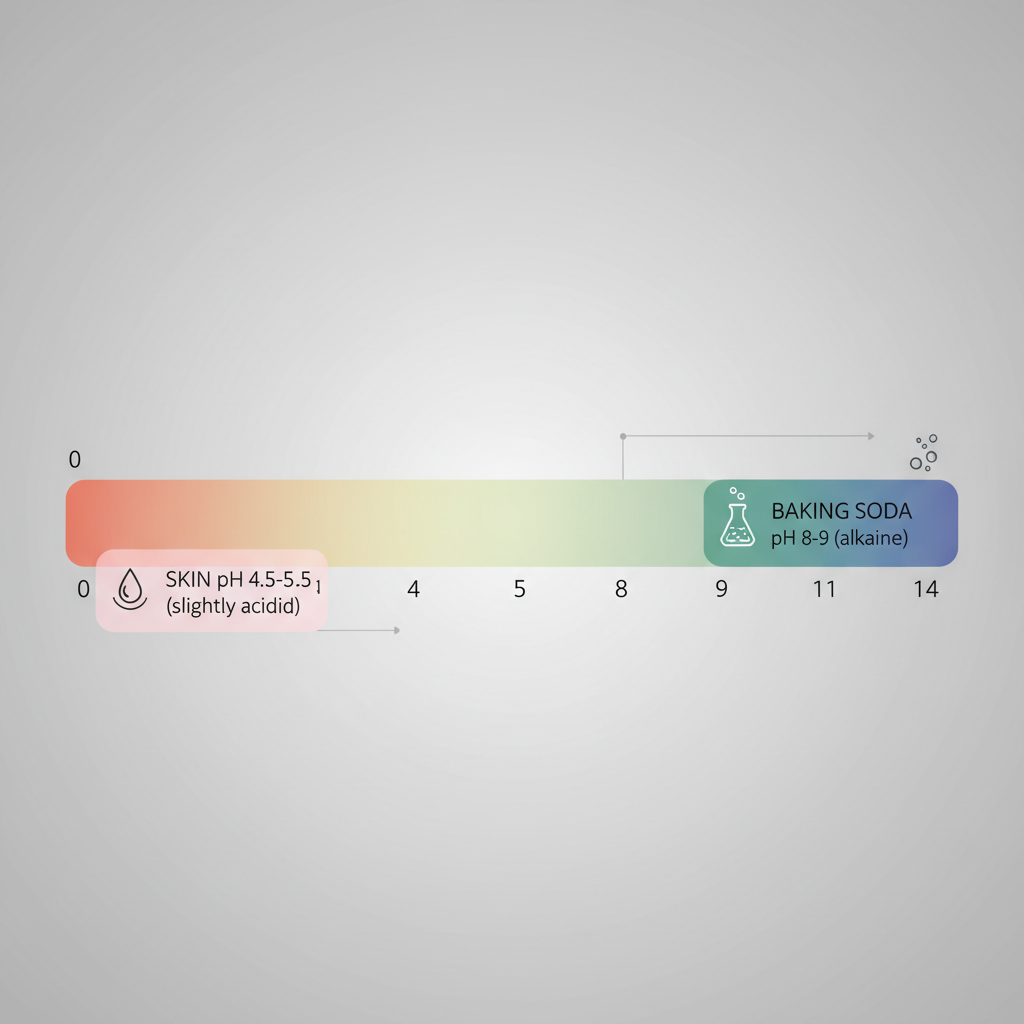
Here’s where the trouble starts. Your skin has a natural pH of approximately 4.5-5.5—slightly acidic. This “acid mantle” serves important functions:
- Protects against harmful bacteria
- Maintains skin barrier function
- Keeps skin hydrated and healthy
Baking soda has a pH of approximately 8-9—significantly alkaline. When you apply something this alkaline to your skin repeatedly, it can:
- Disrupt the acid mantle
- Compromise skin barrier function
- Lead to irritation, dryness, and inflammation
Signs of Baking Soda Sensitivity
Not everyone reacts to baking soda—estimates suggest roughly 20-30% of people experience sensitivity. Here’s what to watch for:
Mild Reactions
- Slight redness after application
- Occasional itching
- Minor dryness
Moderate Reactions
- Persistent redness that doesn’t fade
- Regular itching or burning sensation
- Flaky or rough skin texture
- Discomfort when applying deodorant
Severe Reactions
- Rash or bumps
- Painful burning
- Cracked or broken skin
- Darkening of underarm skin
Important: If you experience severe reactions, stop using the product immediately. Continuing use can worsen the damage and make your skin more sensitive long-term.
Why Some People React and Others Don’t
Several factors influence whether you’ll react to baking soda:
Individual Skin pH
Some people naturally have less acidic skin, making the pH jump from baking soda less dramatic.
Skin Barrier Health
Those with compromised skin barriers (from conditions like eczema, or even from shaving) are more susceptible to irritation.
Concentration
The amount of baking soda in a formula matters. Some products contain high concentrations (15-20%), while others use minimal amounts (5% or less).
Application Habits
Applying deodorant immediately after shaving, when skin is most vulnerable, increases irritation risk significantly.
Cumulative Effect
Some people tolerate baking soda initially but develop sensitivity over time as the repeated pH disruption accumulates.
Baking Soda-Free Alternatives
If you’ve determined that baking soda doesn’t work for your skin, don’t despair. Several effective alternatives exist:
Magnesium Hydroxide
This has become the go-to baking soda alternative. It neutralises odour effectively but has a pH closer to skin’s natural level, making it gentler for most people.
Found in: Many “sensitive” formula natural deodorants
Zinc Compounds
Zinc ricinoleate and zinc oxide both have antibacterial properties and can neutralise odour molecules.
Found in: Various natural and conventional deodorants
Activated Charcoal
Highly absorbent, charcoal traps odour molecules and excess moisture without affecting skin pH significantly.
Found in: Charcoal-focused natural deodorants
Arrowroot and Tapioca Starch
These absorb moisture effectively, keeping underarms drier and reducing the environment bacteria love.
Found in: Most natural deodorants (often alongside other actives)
Probiotics
A newer approach—probiotic deodorants support beneficial bacteria while discouraging odour-causing strains.
Found in: Probiotic-focused brands
Tips If You Want to Try Baking Soda
If you haven’t tried baking soda deodorant yet, or want to give it another chance:
Start with Low Concentrations
Look for products that list baking soda lower on the ingredient list, indicating smaller amounts.
Don’t Apply After Shaving
Wait at least 12-24 hours after shaving before applying baking soda deodorant.
Alternate Products
Use baking soda deodorant some days and a gentler alternative on others to reduce cumulative exposure.
Watch for Early Signs
At the first sign of irritation, take a break. Don’t push through hoping your skin will “adjust.”
Keep Skin Healthy
Well-moisturised skin with an intact barrier is more resilient. Consider using a gentle moisturiser on underarms at night.
How to Recover from Baking Soda Irritation
If you’re currently dealing with a reaction:
Stop Using the Product
This seems obvious, but some people try to push through. Don’t. Your skin needs a break.
Keep the Area Clean and Dry
Wash gently with lukewarm water and mild, fragrance-free soap. Pat dry thoroughly.
Apply Soothing Ingredients
- Aloe vera gel (pure, without added fragrances)
- Coconut oil (if you tolerate it)
- Colloidal oatmeal products
- Fragrance-free moisturisers
Avoid All Deodorant Temporarily
Give your skin 3-7 days to recover before introducing any deodorant, even a gentle one.
See a Doctor If Needed
If irritation is severe, persistent, or shows signs of infection (pus, spreading redness, fever), consult a healthcare provider.
Finding Your Perfect Match
The natural deodorant market has evolved significantly. Many brands now offer both regular and sensitive (baking soda-free) versions of their products.
Brands with Baking Soda-Free Options
- Wild — Sensitive range uses magnesium
- Fussy — Sensitive formulas available
- Native — Sensitive collection without baking soda
- Schmidt’s — Sensitive skin formulas
When trying new products, always:
- Check the ingredient list
- Do a patch test on a small area first
- Wait 24-48 hours before full application
- Introduce one new product at a time
The Bottom Line
Baking soda isn’t inherently “bad” for skin—it’s remarkably effective at controlling odour and works perfectly well for many people. However, its high pH can cause real problems for those with sensitive or reactive skin.
The key is knowing your own skin:
- If baking soda works for you: Great! Continue using it without concern.
- If you’ve had reactions: Switch to baking soda-free alternatives—there are plenty of effective options.
- If you’re unsure: Start cautiously with low-concentration products and watch for signs of irritation.
Your underarms deserve care, not suffering. Finding the right deodorant might take some experimentation, but irritation-free freshness is absolutely achievable.
Ready to explore alternatives? Check our sensitive skin deodorant guide or browse our product reviews filtered by “sensitive skin” options.