How Does Deodorant Actually Work? The Science Explained
Discover the fascinating science behind how deodorants and antiperspirants keep you fresh. Learn about sweat glands, bacteria, and how to choose the right product for you.
Ever found yourself in a crowded lift, a high-stakes meeting, or a packed train carriage, suddenly realising you forgot to apply deodorant? That creeping awareness of sweaty armpits and potential body odour can throw anyone into a spiral of discomfort. And let’s be honest—no one wants to be the person making others subtly lean away.
But while you’ve probably used deodorant thousands of times, have you ever wondered how this everyday product actually works its magic?
This guide breaks down the fascinating science behind deodorants and antiperspirants, explains why we smell in the first place, and helps you make informed choices about what you’re putting on your body.
Understanding Sweat: It’s Not the Enemy
On a warm day or during an intense workout, your body does something remarkable—it sweats. This is your body’s built-in cooling system, designed to regulate your internal temperature. While essential for your health, it’s not always ideal for social situations.
Here’s the surprising truth: sweat itself is virtually odourless.
The Two Types of Sweat Glands
Your body has two distinct types of sweat glands, each serving different purposes:
Eccrine Glands
- Found all over your body (around 2-4 million of them)
- Produce a light, watery sweat composed mainly of water and salt
- Primary function is temperature regulation
- The sweat from these glands doesn’t typically cause odour
Apocrine Glands
- Located in areas with hair follicles—primarily your armpits and groin
- Become active during puberty
- Produce a thicker, protein-rich secretion
- This is where body odour originates
So Why Does Sweat Smell?
The culprit isn’t the sweat itself—it’s the bacteria living on your skin.
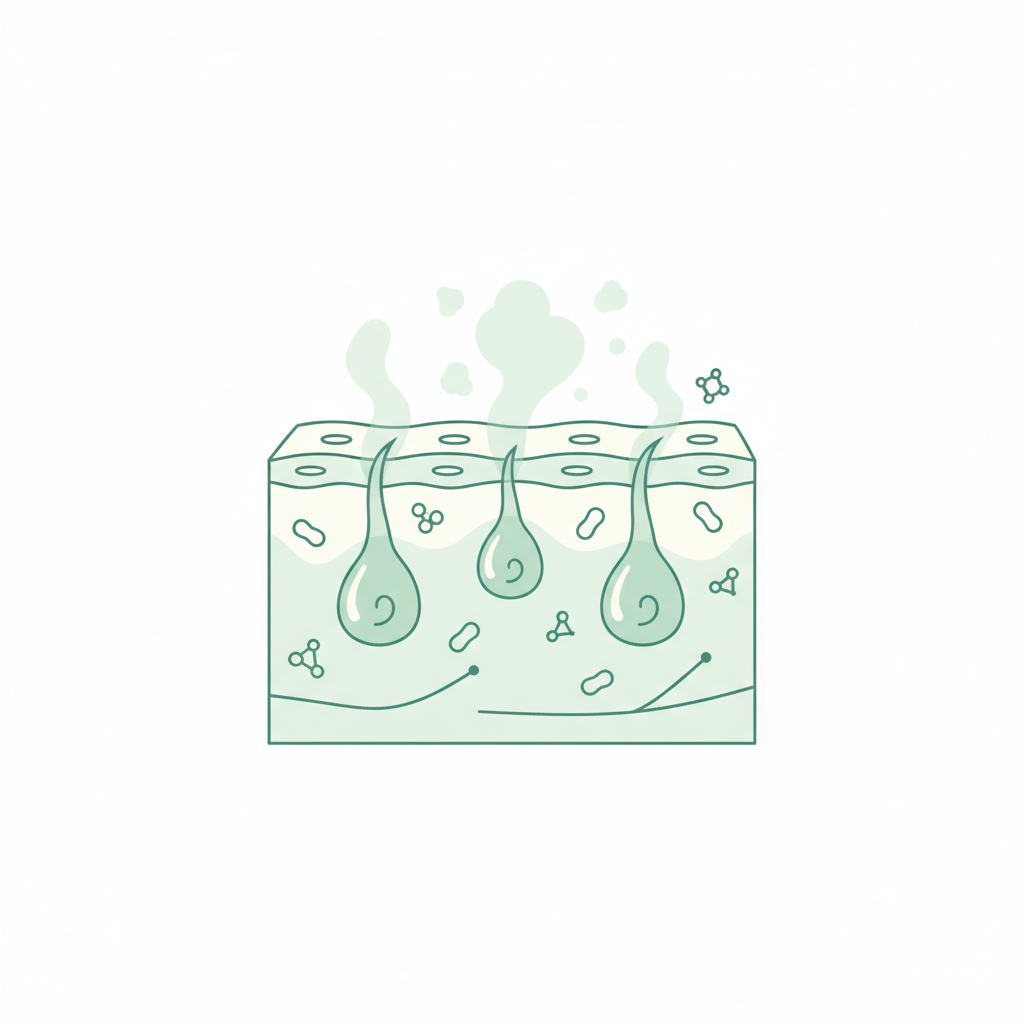
Your skin hosts a thriving community of microorganisms, collectively known as your skin microbiome. These bacteria are perfectly harmless and actually play important roles in skin health. However, they absolutely love the proteins and fatty acids in apocrine sweat.
When bacteria break down these compounds, they produce volatile organic compounds as waste products. These waste products are what create that distinctive body odour. Different bacterial species produce different compounds, which is why body odour varies from person to person.
Key insight: You’re not smelly—the bacteria are! Understanding this changes how we approach odour control.
How Deodorants Work
Deodorants tackle body odour through several clever mechanisms:
1. Creating an Inhospitable Environment
Most deodorants contain ingredients that make your skin’s surface more acidic. Bacteria thrive in neutral to slightly alkaline environments, so increasing acidity makes conditions less favourable for bacterial growth. Fewer bacteria means less odour-causing waste.
Common acidic ingredients include:
- Citric acid
- Lactic acid
- Alpha hydroxy acids (AHAs)
2. Antibacterial Action
Many deodorants include ingredients that directly reduce bacterial populations:
- Alcohol — Creates a hostile environment for bacteria and evaporates quickly
- Triclosan — An antibacterial agent (though increasingly phased out due to environmental concerns)
- Natural antibacterials — Tea tree oil, witch hazel, and other plant-based alternatives
3. Fragrance Masking
Deodorants typically contain fragrances that help mask any residual odour. This is a secondary line of defence—the pleasant scent covers any remaining smell while the active ingredients do the heavy lifting.
4. Absorption
Some deodorants include absorbent ingredients like:
- Baking soda (sodium bicarbonate)
- Arrowroot powder
- Tapioca starch
- Kaolin clay
These help absorb moisture, keeping your underarms drier and less hospitable to bacteria.
How Antiperspirants Work Differently
While deodorants focus on odour, antiperspirants tackle the source—sweat itself.
The Aluminium Connection
Antiperspirants contain aluminium-based compounds (like aluminium chloride or aluminium chlorohydrate) that work by temporarily blocking sweat ducts.
Here’s the process:
- When you apply antiperspirant, the aluminium salts dissolve in your sweat
- This creates a gel-like plug within the sweat duct
- The plug temporarily blocks sweat from reaching the skin’s surface
- Less sweat means less food for bacteria, resulting in less odour
Important to know: These plugs are temporary and naturally wash away over time. Your sweat glands aren’t permanently affected, and sweating resumes normally once you stop using the product.
Safety Considerations
There’s been considerable debate about aluminium in antiperspirants. However, major health organisations, including Cancer Research UK and the NHS, have found no conclusive evidence linking antiperspirant use to breast cancer or other health issues when used as directed.
That said, if you prefer to avoid aluminium, there are plenty of effective aluminium-free alternatives available.
Deodorant vs Antiperspirant: What’s the Difference?
| Feature | Deodorant | Antiperspirant |
|---|---|---|
| Primary function | Controls odour | Reduces sweat |
| How it works | Kills bacteria/masks smell | Blocks sweat ducts |
| Contains aluminium | Usually no | Yes |
| Classified as | Cosmetic | Drug/medicine |
| Best for | Light sweaters, odour control | Heavy sweaters, staying dry |
Many products combine both functions, offering a deodorant-antiperspirant hybrid that tackles both wetness and odour.
Choosing the Right Product for You
Selecting the ideal deodorant depends on your personal needs, skin sensitivity, and values.
Consider Your Sweat Level
- Light sweater: A standard deodorant should suffice
- Moderate sweater: Consider a deodorant-antiperspirant combination
- Heavy sweater: Look for clinical-strength antiperspirants
Check Your Skin Sensitivity
If you have sensitive skin, look for:
- Fragrance-free formulas
- Baking soda-free options (can cause irritation for some)
- Hypoallergenic labels
- Gentle, natural ingredients like aloe vera
Read the Ingredients
Being mindful of what you put on your body is always wise. Consider avoiding:
- Parabens — Preservatives with some health concerns
- Phthalates — Used in fragrances, linked to hormonal disruption
- Triclosan — Environmental concerns about water pollution
Think About the Environment
Eco-conscious choices include:
- Plastic-free packaging
- Refillable systems
- Natural, biodegradable ingredients
- Cruelty-free and vegan formulas
Natural Deodorant: A Growing Alternative
Natural deodorants have surged in popularity as people seek cleaner alternatives. These products typically rely on:
- Baking soda — Neutralises odour-causing acids
- Arrowroot or tapioca starch — Absorbs moisture
- Coconut oil — Natural antibacterial properties
- Essential oils — Provide fragrance and antibacterial benefits
- Mineral salts — Create an unfavourable environment for bacteria
The Transition Period
Switching to natural deodorant often involves an adjustment period. Your body may initially produce more sweat or odour as it adapts. This typically lasts 2-4 weeks. Our guide to switching to natural deodorant covers this in detail.
Finding What Works
Not all natural deodorants work equally well for everyone. Body chemistry varies significantly, so finding your perfect match might require some experimentation. What works brilliantly for one person may not suit another—and that’s completely normal.
Pro Tips for Staying Fresh
Beyond choosing the right product, these habits help maximise freshness:
- Apply to clean, dry skin — Deodorant works best on freshly washed skin
- Apply at night — For antiperspirants, nighttime application allows the product to work while you sleep
- Don’t over-apply — More product doesn’t mean more protection
- Wear breathable fabrics — Natural fibres like cotton help reduce sweat
- Stay hydrated — Proper hydration actually helps regulate sweating
- Manage stress — Stress sweat (from apocrine glands) is particularly odour-prone
The Bottom Line
Understanding the science behind deodorants empowers you to make better choices for your body and the planet. Whether you opt for a traditional antiperspirant, a natural deodorant, or something in between, you now know exactly how these products keep you fresh.
Remember: sweating is completely natural and healthy. The goal isn’t to eliminate it entirely but to manage it comfortably. Your body is doing exactly what it’s designed to do.
Ready to find your perfect match? Take our Find Your Perfect Deodorant quiz for personalised recommendations based on your unique needs.