A Beginner's Guide to Homemade Natural Deodorant
New to DIY deodorant? This beginner-friendly guide explains why homemade natural deodorant works, what ingredients you need, and how to make your first batch with a simple recipe.
Finding a deodorant that keeps you fresh without irritating your skin or harming the environment can feel like an endless quest. You’ve probably stood in supermarket aisles, scrutinising ingredient lists and wondering whether you really want to apply those unpronounceable chemicals directly to your skin. Add the plastic packaging to the equation, and it’s enough to make anyone consider alternatives.
The solution might be closer than you think—your kitchen. Making your own natural deodorant gives you complete control over what goes on your body, eliminates unnecessary packaging, and often works better than products you’d pay premium prices for at the shop.
This guide is for complete beginners. We’ll cover why natural deodorant works, what ingredients you need, and walk you through making your first batch.
Why Consider Homemade Deodorant?
Before diving into recipes, it’s worth understanding what makes DIY deodorant appealing beyond the obvious environmental benefits.
Your Skin Will Thank You
Commercial deodorants and antiperspirants often contain ingredients that can irritate sensitive underarm skin. Fragrances, preservatives, and aluminium compounds are common culprits. When you make your own, you choose every ingredient—and you can adjust the formula if something doesn’t agree with your skin.
Many people report reduced irritation, fewer ingrown hairs, and softer underarm skin after switching to natural formulas. The moisturising oils and butters in homemade deodorant nourish skin rather than merely masking odour.
It Actually Works
Natural deodorant has a reputation for being ineffective, but that’s often because of poor formulations or unrealistic expectations. Understanding the difference between deodorant and antiperspirant helps set proper expectations.
Antiperspirants block sweat glands with aluminium compounds. They reduce wetness but don’t address odour-causing bacteria.
Deodorants (including homemade versions) neutralise odour-causing bacteria without blocking sweat. You’ll still perspire—that’s healthy and natural—but you won’t smell.
A well-formulated natural deodorant provides effective odour protection for most people. The key is using the right ingredients in the right proportions.
The Numbers Don’t Lie
The shift toward natural deodorants isn’t a passing trend. The global natural deodorants market was valued at over USD 1.3 billion in 2020, with projected growth of nearly 19% annually through 2028. More people are questioning what they put on their bodies—and finding that natural alternatives deliver.
Understanding Key Ingredients
Each ingredient in natural deodorant serves a specific purpose. Knowing what they do helps you troubleshoot and customise.
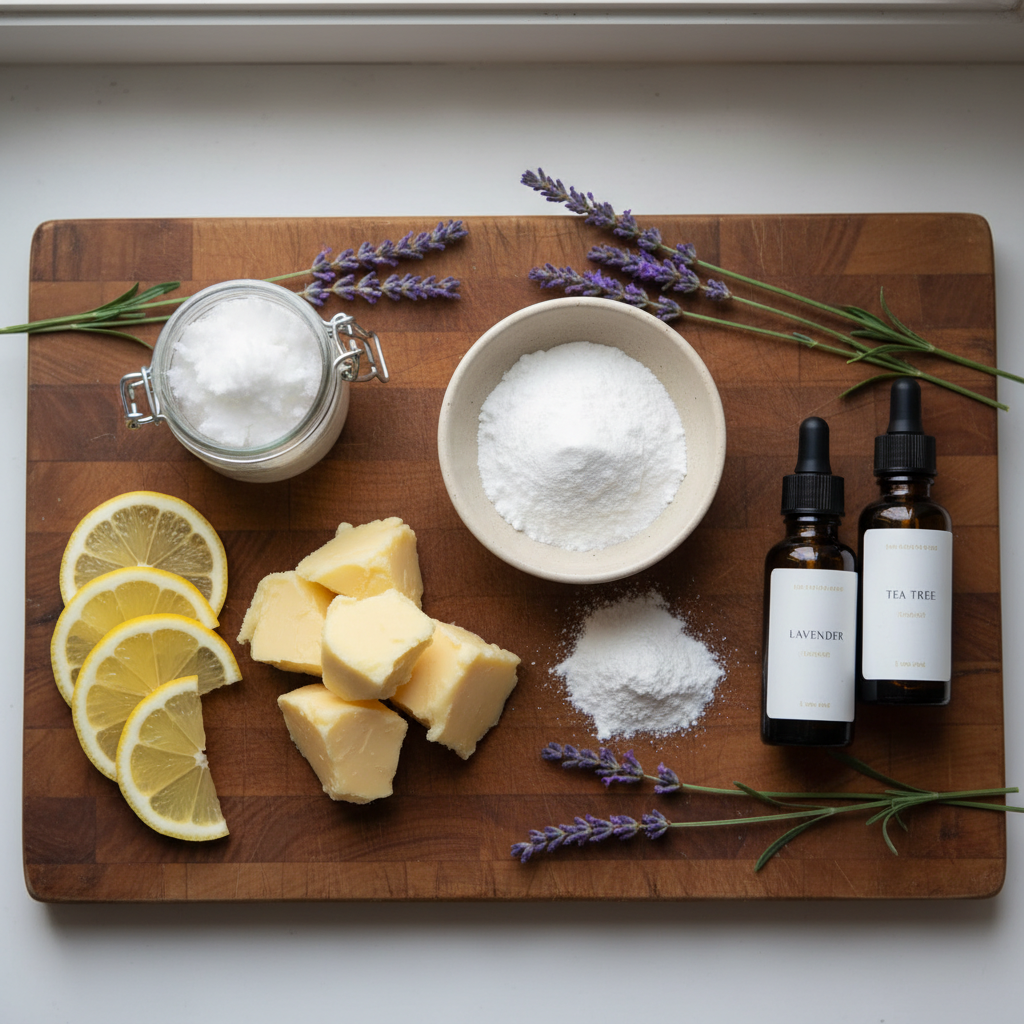
Odour Neutralisers
Baking soda (sodium bicarbonate) is the workhorse of natural deodorant. It creates an alkaline environment that inhibits bacterial growth and neutralises acidic odour compounds. It’s highly effective but can irritate sensitive skin due to its high pH.
Arrowroot powder absorbs moisture and creates a smooth, silky texture. It’s gentle enough for sensitive skin and helps keep underarms dry without blocking pores.
Moisturising Bases
Shea butter is rich in vitamins and fatty acids, making it an excellent skin moisturiser. It’s anti-inflammatory and soothing—particularly helpful if commercial deodorants have left your underarms irritated.
Coconut oil does double duty: it moisturises skin and provides antimicrobial properties thanks to its lauric acid content. It also gives homemade deodorant a pleasant, subtle scent and smooth texture.
Optional Fragrance
Essential oils add natural fragrance and, in some cases, antibacterial properties. Lavender, tea tree, and peppermint are popular choices. Start with fewer drops than you think you need—essential oils are concentrated, and their scent intensifies as the deodorant sets.
What You’ll Need
Gather these items before starting. You likely have most of them already.
Ingredients
| Ingredient | Amount | Purpose |
|---|---|---|
| Shea butter | 3 tablespoons | Moisturises and soothes skin |
| Coconut oil | 2 tablespoons | Antimicrobial, creates smooth texture |
| Baking soda | 2 tablespoons | Neutralises odour |
| Arrowroot powder | 2 tablespoons | Absorbs moisture |
| Essential oils | 10-15 drops | Fragrance (optional) |
Equipment
- Double boiler or a glass bowl that fits over a saucepan
- Stirring spoon (wooden or silicone)
- Measuring spoons
- Container for the finished product (small jar, tin, or empty deodorant tube)
A kitchen scale isn’t essential but helps if you want to scale recipes up or down.
Making Your First Batch
This beginner recipe produces a balanced formula that works well for most people. The whole process takes about 20 minutes, plus setting time.
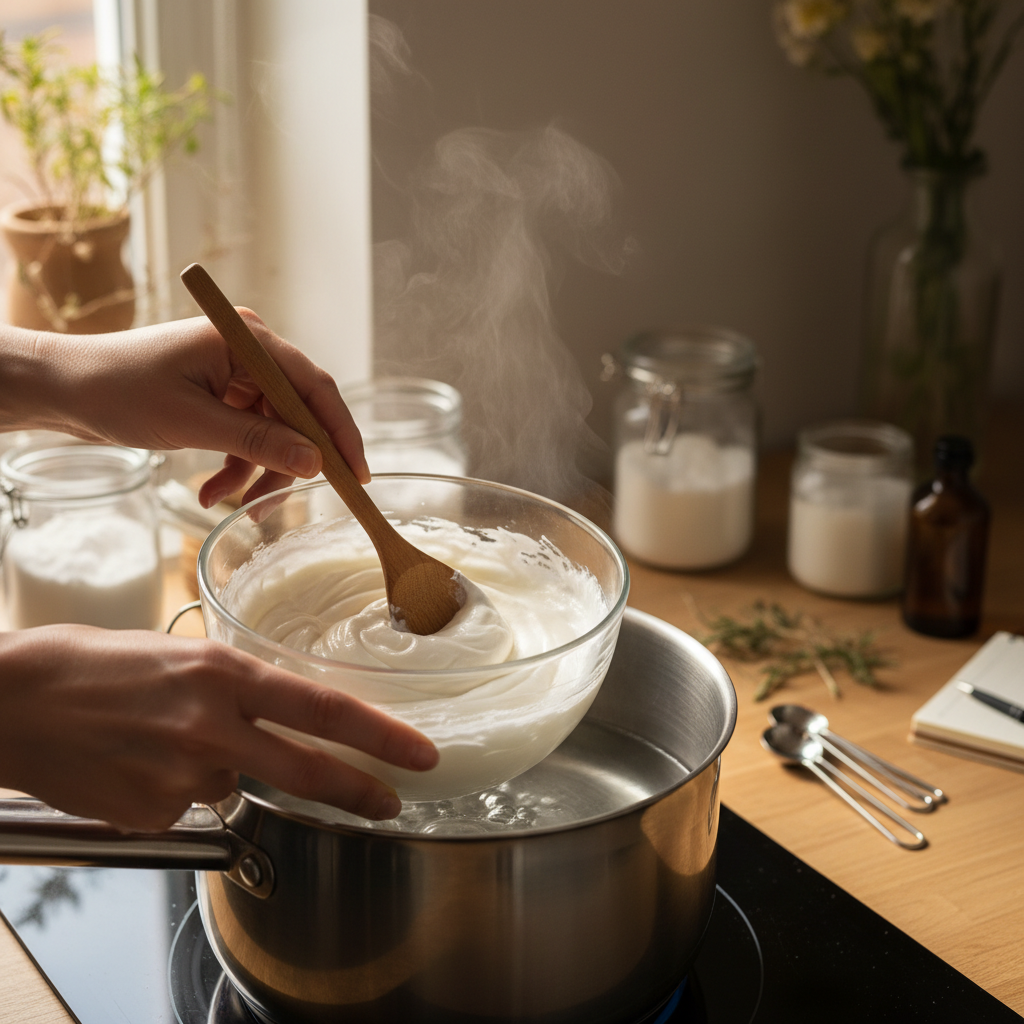
Step 1: Melt the Oils
Create a double boiler by placing a heat-safe bowl over a saucepan with an inch of simmering water. Add the shea butter and coconut oil. Stir gently until fully melted—this takes 3-5 minutes.
Tip: Don’t let the water boil vigorously. Gentle heat preserves the beneficial properties of the oils.
Step 2: Remove from Heat and Cool Slightly
Once melted, remove the bowl from heat. Let it cool for 2-3 minutes. The mixture should still be liquid but not hot.
Step 3: Add Dry Ingredients
Sift the baking soda and arrowroot powder into the melted oils. This prevents clumps. Stir thoroughly until completely combined and smooth.
Tip: If you’re sensitive to baking soda, reduce it to 1 tablespoon and increase arrowroot to 3 tablespoons. You can also substitute magnesium hydroxide powder for a gentler formula.
Step 4: Add Essential Oils
If using essential oils, add them now while the mixture is still liquid but not hot (heat degrades essential oils). Start with 10 drops and add more if desired. Stir well to distribute evenly.
Popular combinations:
- Fresh: 5 drops lemon + 5 drops peppermint
- Calming: 10 drops lavender
- Woodsy: 5 drops cedarwood + 5 drops bergamot
Step 5: Pour and Set
Pour the mixture into your container. For a jar, simply pour and let set at room temperature. For a deodorant tube, let the mixture cool and thicken slightly (about 5 minutes) before pouring—this prevents separation.
Leave at room temperature for several hours, or refrigerate for 30-60 minutes until solid.
Yield and Storage
This recipe makes approximately 100g of deodorant—enough for 2-3 months of daily use. Store in a cool, dry place. In hot weather, refrigeration prevents melting.
Tips for Success
Patience with setting: Diving in too soon leads to a crumbly, messy product. Let your deodorant solidify completely before using.
Measure carefully: Eyeballing ingredients often results in a formula that’s too soft or too hard. Proper measurements matter, especially for your first few batches.
Start with less essential oil: You can always add more fragrance, but you can’t remove it. Do a “sniff test” before pouring into your container.
Expect an adjustment period: If you’re switching from antiperspirant, your body needs 2-4 weeks to adjust. You may sweat more initially as blocked pores clear. This is temporary.
When Things Go Wrong
Too soft? Add more arrowroot powder or store in the refrigerator.
Too hard? Remelt and add another tablespoon of coconut oil.
Skin irritation? Reduce or eliminate baking soda. Try the sensitive skin formula in our comprehensive DIY deodorant guide.
Doesn’t control odour? Give your body time to adjust. If the problem persists after 3-4 weeks, try increasing baking soda slightly or adding tea tree oil for extra antibacterial power.
Next Steps
Once you’ve mastered this basic recipe, you’ll likely want to experiment. Our complete guide to making natural deodorant covers:
- Sensitive skin formulas (baking soda-free)
- Firm stick recipes for warm climates
- Cream formulas for jar application
- Climate adjustments
- Detailed troubleshooting
Making your own deodorant is genuinely satisfying. There’s something reassuring about knowing exactly what you’re putting on your skin—and creating a product tailored to your preferences. Start with this simple recipe, learn what works for your body, and adjust from there.
The perfect formula is the one that works for you.